10/03/2023
Blog


Many government benefits programs are designed to help Americans at critical times of need — often emergencies. That’s when getting financial help can be the difference between having a roof over one’s head or a meal on the table. The effectiveness of these programs is measured by how well they’re utilized.
The problem is constituents often under-utilize government benefit programs they may be eligible for due to administrative costs — or the “time tax” — required to learn about a program, complete paperwork, gather required documents and engage a government agency. The Biden administration’s Executive Order on transforming the federal customer experience (CX) seeks to reduce this burden, urging agencies to deliver modern, accessible and equitable services for all.
How well are agencies doing? TransUnion surveyed 1,000 US adults to assess government benefit enrollment CX, and identified potential burdens and opportunities for improvement.
The good news is agencies have made great strides to improve the accessibility of benefit programs by developing online experiences for program education, benefit application, eligibility certification and support information. This aligns with consumer expectations: 79% of surveyed consumers planning to enroll in a government program in the next three years want to do so online.
Unfortunately, having the option of online benefits administration cannot singularly improve CX. Constituents value an omnichannel experience that combines online, mobile, call center and in-person channels to help them get information and assistance needed to access benefits. For example, when seeking information about a program, TransUnion found 60% of constituents will call an agency — nearly as many as will visit an agency website.
Despite a clear preference for online enrollment, that preference comes with some fear regarding identity verification. Respondents noted a disconnect between expectations and reality regarding the length of time required to collect the information needed to verify one’s identity during online applications. Nearly half (46.3%) of respondents would prefer to spend less than 10 minutes doing so, but just 37.0% of respondents with prior online applications indicated their experiences met that expectation.
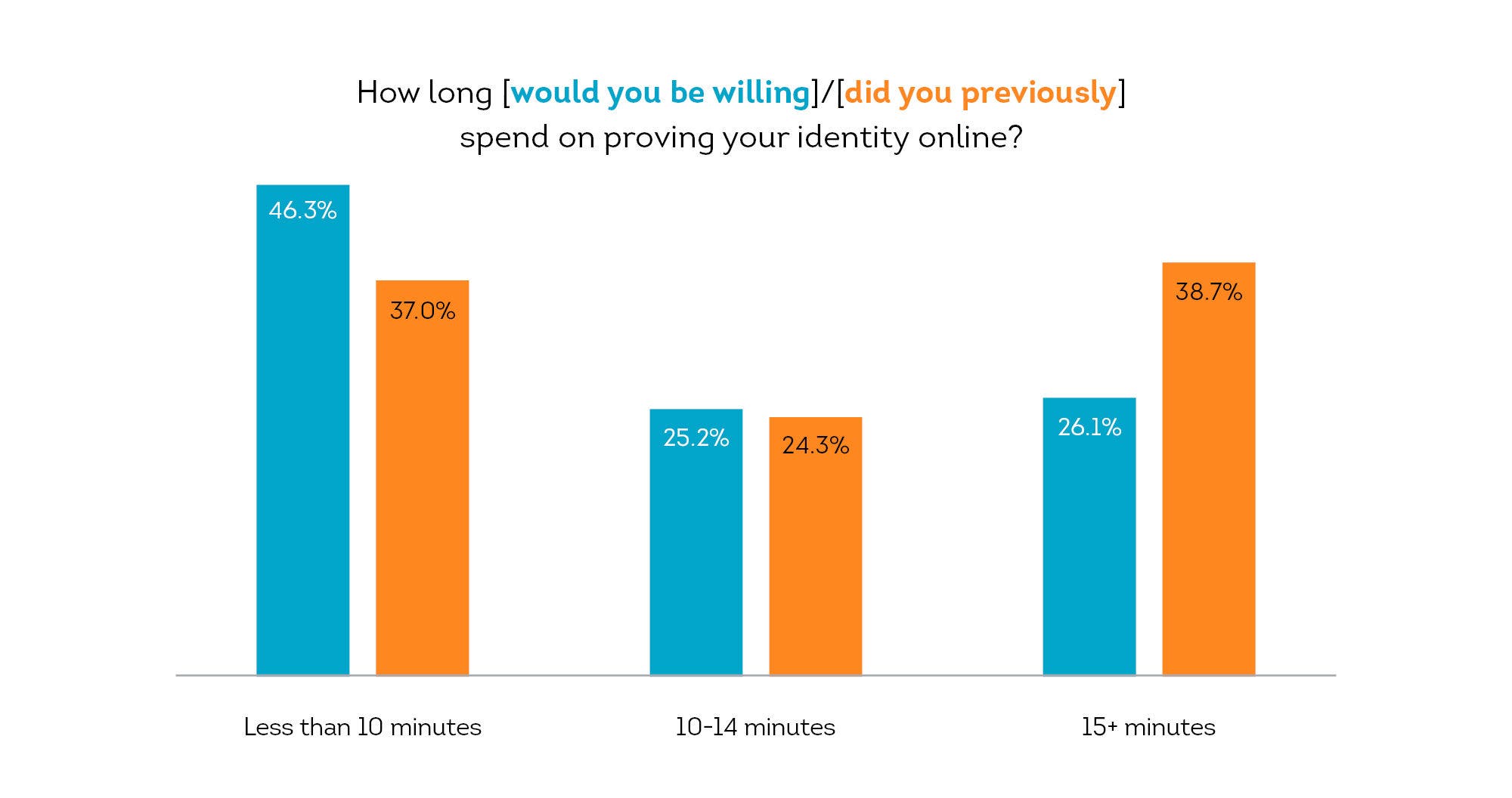
Not only did remote identity verification take more time than expected, but people who enrolled online were more likely to report delays or denials compared to respondents with in-person or phone enrollments.
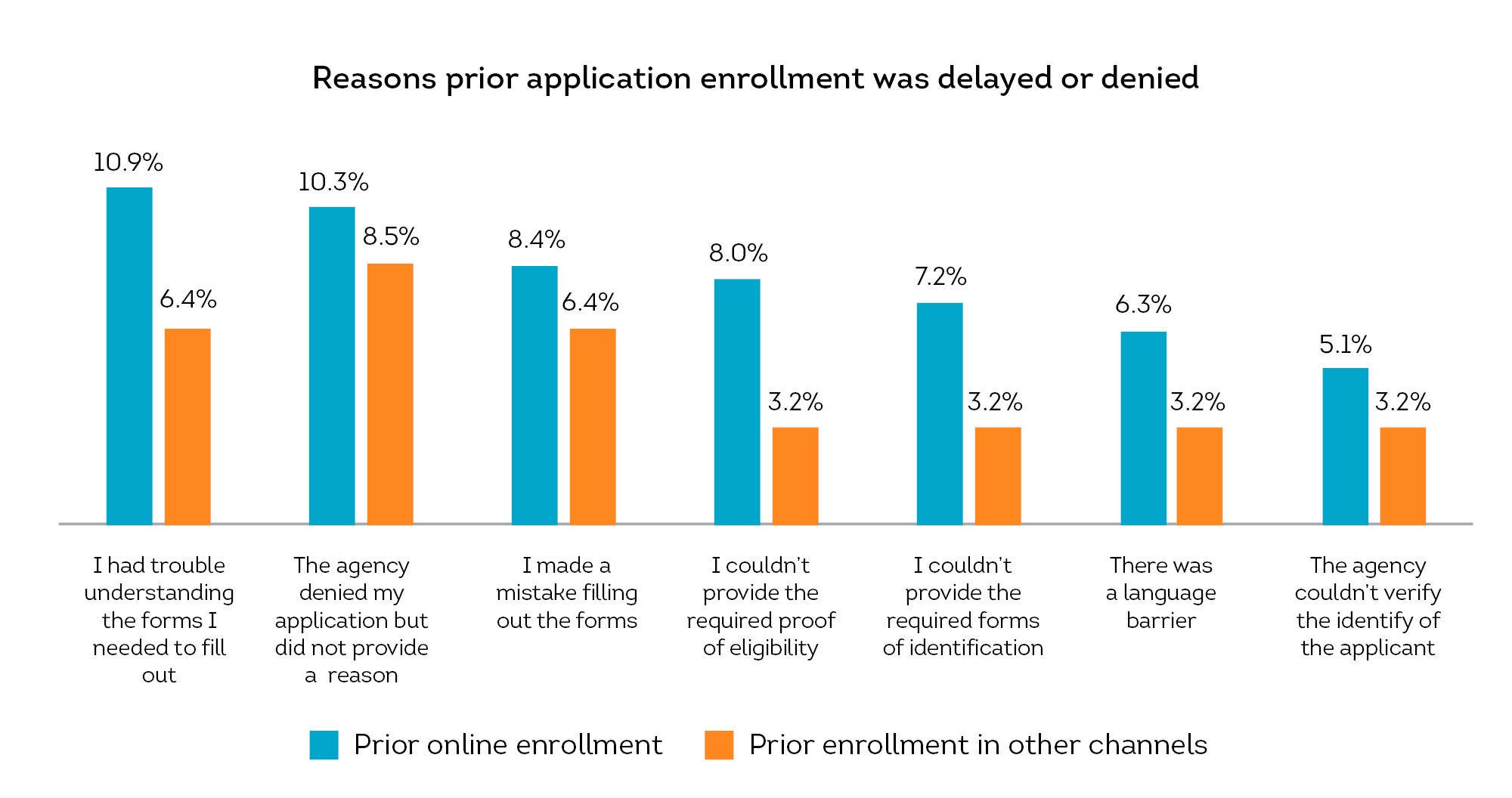
The most significant areas of difference between online and in-person enrollment involved:
Another 5.1% of respondents indicated the government agency couldn’t verify their identities during the online enrollment process, particularly troubling for those who may benefit from a government program the most.
The overwhelming majority of constituents plan to enroll for government benefits online. While the experience with online enrollment is generally positive, agencies need to continue to improve all steps in the process. For example, though people predominantly rely on agency websites for information, education and benefit administrations, they may use many channels throughout their enrollment journeys. Investment in online enrollments to meet demand — as well as tools to improve interactions in constituent support channels like call centers — will be critical to the successful design and delivery of modernized experiences. Online enrollment specifically must also be streamlined to further reduce administrative burdens and provide more accessible and equitable services for Americans.
Download our recent research report — Reduce Benefit Enrollment Burdens — for more insight into benefit enrollment attitudes and experiences.

Information for Good®.
Connect with us


