


Key Takeaways:
- Your audience strategy shouldn’t be set in stone — continuously optimizing your audiences and watching for growth opportunities are key to success.
- While first-party data is important, it should be a jumping off point, not a destination. Responsibly sourced third-party data can be a powerful tool for expanding your reach.
- Interoperability is imperative in an increasingly fragmented media ecosystem.
Audience strategy isn’t the flashiest part of marketing. It won’t win you a Cannes Lion or score points with your CFO. But here’s the truth: Even the most brilliant, creative or advanced analytics won’t deliver if you’re not reaching the right people.
And yet, audience strategy often gets overlooked — which is a costly mistake. Done right, it can fuel growth, improve collaboration and deliver the personalized experiences customers expect. Done wrong? It can quietly sabotage your entire marketing plan.
Let’s talk about the three biggest missteps marketers make — and how to avoid them.
Mistake #1: Treating audience strategy like a one-and-done project
Marketing never stands still — and neither should your audience strategy. Consumer identity is constantly evolving: new platforms, new behaviors and new expectations. But too often, marketers take a “set it and forget it” approach. That’s a surefire recipe for missed opportunities.
Instead, think of your audience strategy as a living, breathing system. Keep testing. Keep refining. Keep expanding your view beyond the obvious.
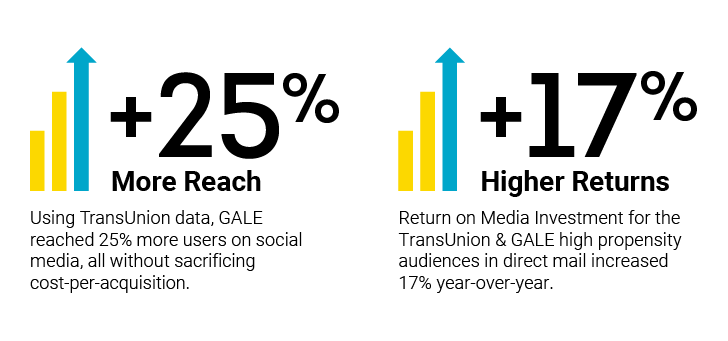
For example, take GALE, an integrated media agency. Faced with rising acquisition costs for a home improvement brand, it partnered with TransUnion® to connect its first-party data with our robust identity graph. This helped it uncover customer traits that told a story around intent to buy; build a scoring model for prospects based on these new criteria; and segment those prospects into specific audiences for a hyper-targeted approach. The result: 25% more users reached on social without increasing CPA — and a 17% lift in direct mail ROMI year over year.
Continuous optimization isn’t just a tactic — it’s a winning strategy.
Mistake #2: Focusing exclusively on first-party data
First-party data might be gold — but it’s not the whole treasure chest.
Yes, it’s accurate and privacy conscious. But even the biggest brands rarely have enough of it to fuel full-funnel marketing at scale. Relying on it alone limits your reach and slows your ability to adapt.
The solution? Smart supplementation. Privacy-conscious collaboration and responsibly sourced third-party data can unlock new audiences and insights you’d never see otherwise.
As TransUnion EVP of TruAudience® Growth Strategy Matt Spiegel put it in an interview with David Kaplan of Beet.tv: “Your own customer data is absolutely the foundational asset to start from, but it’s not the only answer.”
Think collaboration, not isolation. Today’s cloud-based tools make it possible for marketers to team up with trusted partners, share insights securely and move faster… and do it all without shuffling around sensitive data. It’s about working smarter, not riskier.
And let’s not forget third-party data. When it's vetted and responsibly sourced, it opens doors you can’t unlock with first-party data alone. It helps you scale, find new customers across a fragmented media landscape, and pivot quickly when consumer behavior shifts.
In today’s fragmented media landscape, collaboration is the name of the game.
Mistake #3: Treating interoperability as a “nice-to-have”
Here’s a reality check: The average marketer uses 16 or more martech solutions. If those tools don’t talk to each other, you’re flying blind.
Disconnected systems mean incomplete customer views, clunky personalization and wasted media dollars. The fix? Identity.
By resolving all your platforms to a single identity spine, you create a unified, actionable view of your customers. That’s what one fitness technology brand discovered after conducting a data health assessment with TransUnion. Because it interacted across multiple touchpoints, this brand toiled to get a clear picture of its customers across touchpoints. By linking disparate data sources, it filled critical gaps and finally saw customers from every angle.
Interoperability isn’t optional anymore; it’s the backbone of modern marketing.
The bottom line
Audience strategy isn’t a box to check — it’s a growth engine. Avoid these three mistakes and you’ll be better-positioned to expand your reach, deliver enhanced experiences and future-proof your marketing.
Ready to rethink your approach? Start by asking:
- When did we last refresh our audience strategy?
- Are we over-relying on first-party data?
- Do our tools actually work together?
If you want to win in today’s market, it’s not enough for your brand to be creative — it has to be connected.


