10/11/2026
Podcast

Mortgage lenders are evaluating more data sources and newer scoring models, but the value of those inputs depends on how well they represent a borrower’s financial activity and support responsible risk decisions.
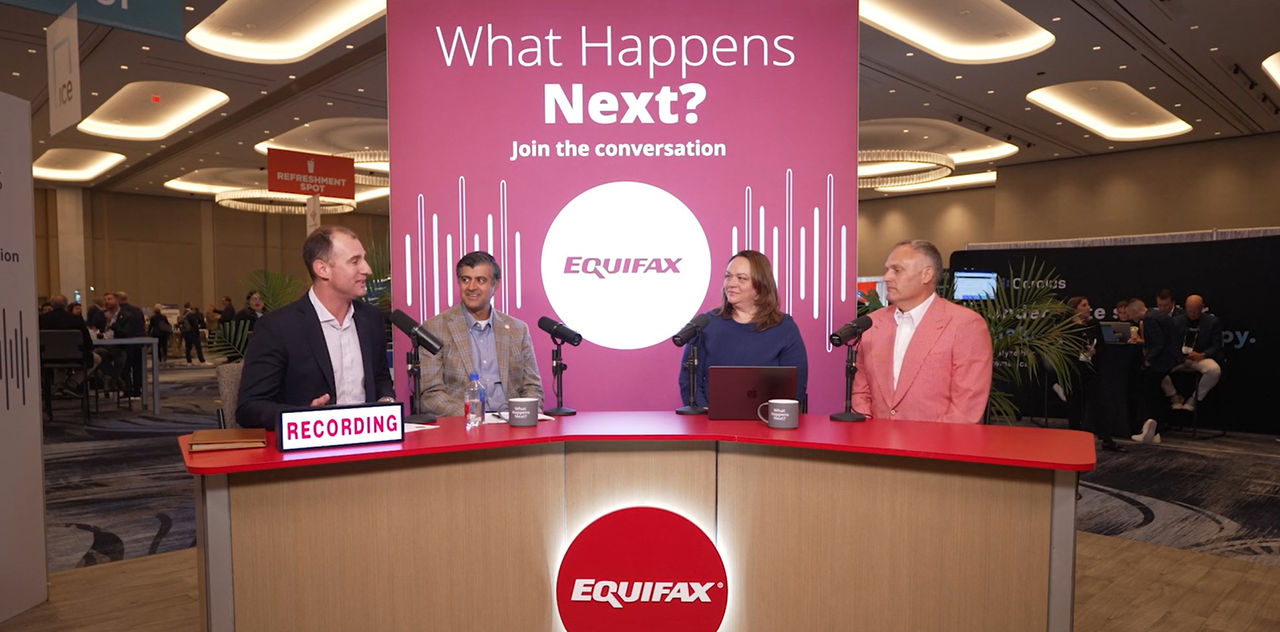
In this episode of Market Pulse, Clayton Collins, CEO of HousingWire, speaks with Satyan Merchant of TransUnion®, Joel Rickman of Equifax and Michele Bodda of Experian. Together, they discuss how score modernization is reshaping mortgage lending, why credit data differs across bureaus and how lenders are incorporating broader data sources into risk assessment and underwriting decisions.
The conversation explores what these changes mean for borrower visibility, mortgage workflows and the future of credit reporting.
Topics covered include:
Host: Clayton Collins, HousingWire
Panelists:
Clayton Collins, HousingWire: Welcome to Market Pulse. I'm Clayton Collins, the CEO at HousingWire. And I'm genuinely glad to be back in this podcast host seat talking about credit reporting. One year ago, something very special happened at MBA Annual. I had the opportunity to sit down with leaders from all three nationwide consumer reporting agencies to talk about candidly what's happening in credit reporting in the mortgage and housing industry. The conversation really resonated. It kicked off a lot of conversations. On the expo hall floor, but also a lot of conversations that followed the event, conversations about credit data, scores, and what these three organizations actually do and how they're designed to compete. So today we're doing it again, podcast 2.0, and the timing really couldn't be more relevant. It's been a pivotal year for mortgage and housing in the credit space, credit cost, score wars, and now a renewed push to bi-merge via the FHFA. That was all over the news in the last several weeks and months. The role these NCRAs play in helping housing professionals help responsibly get borrowers into the homes and at the closing table has been a really front and center topic. And there's a lot for the four of us to unpack today. So please let me introduce today's guest. Joining us from Equifax, we have Joel Rickman; from TransUnion, Satyan Merchant; and from Experian, Ms. Michelle Bodda. Joel, Satyan, Michelle, thank you all so much for joining me.
Michele Bodda, Experian: Thanks, Clayton. Good to be here again.
Joel Rickman, Equifax: Thanks for having us.
Satyan Merchan, TransUnion: My pleasure.
Clayton Collins: All right, so three leaders from three fierce competitors. You've all shown up again because we know we add value to the industry and we have these conversations. So let's jump right in. So when we sat down a year ago for the first version of this conversation, we talked about what had changed in the past year. So let's revisit that question. What has changed in the last year in the credit reporting space? And I'd love to kick off with Michelle.
Michele Bodda: Thanks, Clayton, and thanks again for having me back. When we had this conversation last year, the industry was still preparing for the transition to more modern credit-scoring models that use currently available data. What's exciting about where we're at now is we're not talking about it anymore. Now that current data gets to prove its value through consumption and use in those more modern scores, and the data gets to speak for itself. VantageScore 4.0 is available for loans that are securitized through Fannie and Freddie, giving lenders greater choice, allowing broader, more modern data to play a role in mortgage decision, and we're seeing the industry embrace these newer scores. Some originators even saying so publicly, sending out press releases. That's exciting, moving from policy to practice. So since last year, we've also taken a look, Experian, at how consumers are feeling about all that. And in a recent survey that we did, we learned that people are paying attention and moving to better and more inclusive data and more modern scores may very well become the next big competitive differentiator for lenders. Just real quick, we found that 41% of people are aware that mortgage lenders now have access to newer score models that incorporate things like rent and utility payments. And one third, 33%, would actively seek out a new lender if they learned the current one was relying on old approaches. People want to be recognized for a more complete financial picture, and they deserve to be.
Clayton Collins: That makes perfect sense. Sachan, we hear people talk about the three credit bureaus often, and they've definitely been in the headlines that our HousingWire newsroom have c has covered a lot of the press releases this year. But there's still some perception out there that three bureaus may mean redundancy. Can you talk a little bit about how that is true or is not true and the shared mission?
Satyan Merchant: Yeah, sure. Thanks Clayton. I'll probably add a little bit to what Michelle said too. I think these go hand in hand. So I think well, first I'd start with the way you framed that question is really interesting because there is a misconception, I think, out there that there's an end game for all the bureaus to look the same, to have, exact replica of the database. And I think the answer is that it really couldn't be further from the truth. The three bureaus are not copies of the same database. We compete and our teams compete fiercely every day to develop distinct relationships with data furnishers, data sources, the analytics, and the products that are derived on top of or off of that credit data. And so, examples could be an auto loan for a consumer might be furnished to the TransUnion Bureau while a retail card might be furnished to you know the Equifax Bureau only and you know maybe there's a rental payment that's furnished to the Experian Bureau, right? And so I really I we are starting to see and while there isn't any sort of comparison of the data, because again it's all proprietary, it's our competitive advantage just like Michelle and Joel's, the more dispersion of data, the more variety as Michelle mentioned earlier, of data sources, I think the more different these bureaus are going to be. All that said, that the shared mission is to help ultimately qualified borrowers reach closing and while doing that protect their information, support a safe and sound mortgage and housing finance ecosystem, and really help qualify and get as many consumers into homes in a responsible way. I think what's really important to understand is a lot of conversation about scores this year as Michelle talked about score modernization driven by the FHFA, which I think was a great move. But that score is all driven by the underlying data, whether it's a VantageScore, a FICO score, a FICO 10 T, whatever score it might be, it's all about that underlying data. And that data, the more rich and broad it gets, the more powerful that score becomes.
Clayton Collins: Yeah, I'm really happy you brought up the differentiated and in some ways com competitive data. We're going to come back to that in a in a really deep way. But before we move forward into the data conversation, Joel, I want to give you a chance to one, say hello, but also talk about the role the bureaus play in helping qualified borrowers actually get to the closing table, which is the which is the mission of this whole industry, help get the right people into the right houses.
Joel Rickman: Absolutely. And first I just want to reiterate the thank you for everybody getting together and spending time here. It's when I started in this role a few years ago, I never thought we would talk so much publicly about the role of credit scores and credit bureaus that we do, but there's clearly still a lot of opportunity to educate and delighted to be part of that conversation. I would build a little bit in regards to looking back in the last year. On the fact that I just want to amplify what Michelle said in regards to what's been really exciting to go online and see folks on LinkedIn show the difference between the three credit scores or bureaus or the difference between a legacy score and the new score that's using more data. And then seeing CEOs from, some of the largest lenders out there talking about how that's helping get more people qualified and them to win business. That's what it's all about is getting people qualified. So our role is working as diligently as possible to make sure that we're providing the fullest picture of the consumer because we really have obligations to both sides of the equation. We have obligations to getting that consumer qualified for the good credit history they have, the accurate credit history we have. But we also have obligations to the American taxpayer and the financial institutions from a safety and soundness perspective to make sure that full view of the customer is readily available. But the simple fact of the matter is that. Not every financial institution does want to contribute to all. And, two quick real examples that we Experienced inside of our own environment and some of our employees, we had one person that was going to get requalified and they had a mortgage through a credit union that was only being reported on Michelle's bureau. And so if that was left off and they went to apply for a refi somewhere, it's possible the loan without all three reports The loan that they were refined wouldn't even show up on a credit report, which is a big miss if we left that out. Same scenario as we've had folks that have auto trade lines that missed payments. And so you have one bureau that's got that trade line that the credit score is 40 or 50 points lower with that credit bureau than the one that's missing, or the ones that don't have that trade line. So you're getting a partial view of that customer. So it's all of us working together. To try to get that picture. And we all wish we had 100% coverage. But the reality of the situation is despite trying to do that, we haven't been able to get everyone to want to contribute to each. But that's just the first part of the story. The second part of the story that we're all working diligently to do to help get people qualified is the VantageScore opens the door, as does FICO 10T, to more data and using that data to make a better decision. So each one of us. If you were to go back and study press releases from the last year, all three of the bureaus are working as hard as we can to get additional data resources, additional partnerships, and get a broader view of the customer so that expanded view gets used to paint the best picture, to provide the best chance of qualification, the best chance at the right LLPA table, rate structure, and provides a safety and soundness for the overall investment.
Clayton Collins: Yeah, I think you started you're starting
Michele Bodda: If I Clayton, if I can, can I just I couldn't agree more with what Joel just said. I also think we're none of us are talking about more data for the sake of more data, right? The mortgage process is complex and innovation should make it more efficient. So the question becomes how can we help people move through the process easier, whether it's the consumer or whether it's the originator, the loan off the loan originator. And how do we get the right data into the originations evaluation at the right time? That's what all of us are talking about. How do we make sure we represent the consumer fairly and help the originator underwrite loans that are going to be productive for them long term? That's the problem that we're solving for.
Satyan Merchant: Yeah, I had the sake of piling out, I think it's such a great point, Michelle, because there's if we think about it, there's the core underwriting, the risk assessment, which we've been speaking a lot about, and the score is the front door into that. But the industry actually has been taking advantage of a lot of this breadth we've talked about over the years with trended data, which all three of the bureaus have supplied in the tri-merge credit report for now over a decade. But this idea of also the workflow optimization, again, I like I like what you said, Joel. Just go back and look at the press releases from each of us, right? We're we're not only adding data for depth in terms of trade lines, we're adding I would say, additional data pieces that may or may not be used in the underwrite, but they're definitely useful in helping an efficient workflow, a workflow that would save a lender costs by maybe having a preview of some data up front. Having a preview of alternative data on the credit file. So it's far beyond just simply what goes into a score, what goes into an underwriting model. It's the entire end-to-end workflow where the again, the bureaus compete and we are proud of it when we innovate and put a press release out. But all three of us have been doing that for not just this past year, but for many, many years.
Joel Rickman: And honestly, Clayton, one of the things I just to kind of circle that loop there is in some cases I feel like I'm the one that's behind at Equifax in the mortgage space because other verticals in auto and consumer finance and personal loans and all of that have been embracing all of this additional data at a much richer level for a number of years. So it's not necessarily new. It's finally being enabled inside of the mortgage ecosystem.
Michele Bodda: That's a really good point.
Clayton Collins: So as each of you pursue more data sources and try to fill gaps with trade lines, is this just a like a game of whack-a-mole where there's so many new entrants and like data providers coming into the system that like even with a full force effort at bringing in more data, there's still a new provider out there that is going to create differentiation between what the respective bureaus are able to provide.
Satyan Merchant: Yeah, so I let I could jump in, right, to say it's I think we just look at the financial services market as a whole and think about the innovation in the industry over the last, I don't know, decade or so. FinTech lenders, many of the big lenders out there didn't exist ten, fifteen years ago. And no matter who this who that furniture is, they start somewhere. And it's I don't I don't know how common it I think it's kind of rare to start off the bat to furnish all three, right? Often they furnish
Joel Rickman: If that's yeah.
Satyan Merchant: To the to the bureau where they have an initial relationship with. And it could take years, if not decades, to kind of disperse that across all three bureaus. And again, in the financial and financial services industry, there's just so much more innovation on things like buy now, pay later. There's a further digitization of rental, which creates the opportunity of more rental trade lines, telco, utility and so on. So yeah, Clayton, I think you're spot on, which is it probably gets more diverse and I think whack a mole is I use that more on the fraud conversation if we get to that. But I think this is more of just like the growth of the industry and how again every day we've got more and more it used to be maybe the credit unions and the banks and then and the lend auto lenders and now it's just so many more lenders that could contribute.
Michele Bodda: I won't be
Clayton Collins: Yeah, I think it's clear how more data and not having a single-bureau view can benefit the consumer because they you may be missing key credit lines that would allow them to get approved for a mortgage product. But there's also the lender side of the equation. How are a multi-bureau view or more data sources helping lenders identify and manage risk inside of their lending businesses?
Joel Rickman: Well, I would jump in real quick on that and just say part of it is that the additional data gives a greater view. So if you think about if I am a new consumer and I maybe have two credit cards and an auto loan, and that's all I've ever had that's on my credit report. I also post most likely paid rent. And so even as a new consumer, I've got rent payments that are flowing in. I've been paying utilities that can be captured from a number of different ways. And potentially I've done buy now, pay later, or other transactions that have been talked about here. As you pull that in, that now gets added, that gets treated inside of the scoring models, and that gets treated as data elements that can make a better decision. So, what that does is it helps folks have a better view and more trade lines and more credit rich. It also makes a big difference, and Satyan referred to this earlier about trended data. That is not a minor aspect by any means. And that makes a really big difference in some folks' credit worthiness is that it is not uncommon. I think we all know of examples where somebody went to apply for a mortgage and maybe had some scratches and dents on their credit report and they were told, hey, go fix these things, pay off this payment, clear that, and come back to us in six, seven, eight months, unfortunately. Well, trended data is helping getting that picture quicker. So people that started that now, their scores are improving as they clear those debts and show that responsibility change. And that accelerates the opportunity for them to participate in the housing market.
Michele Bodda: Yeah, one of the things, I have certainly come to learn over all of my time in this industry is that a thin credit file, a thin traditional credit file does not equate to a thin financial life. And having access to the data that everybody's talking about here today helps us see that more clearly. And s like I said earlier, it's not that it's not more data for the sake of more data. It's to measure the consumer more accurately, to fill in the parts of that financial picture that the traditional file or a legacy score may not fully capture. Joel just brought up rent. We've done some analysis on that too. And it works on the risk side. So not just as a benefit for the consumer, but also for the originator. A renter with three or more negative events like a late payment in 24 months is four times more likely to default on their mortgage. So these types of data can have a real impact for both the consumer in a positive way, giving them representation of how they're living their lives and everything they're paying. And also for the lender not only to approve more loans, but to maybe avoid some risky ones.
Clayton Collins: And is that, that's such a fabulous saying, Michelle, a thin file does not necessarily represent a thin financial life. Are underwriters prepared to look at that trend of data, understand like this, this, this new age borrower who may have a thin file but does have a financial history and bring that into the underwriting process?
Michele Bodda: Yeah, like Satyan said, trended data's been used in the mortgage industry for close to 10 years now, where we're looking at how people actually manage, let's say, their credit card debt, for example. So someone who charges just about everything on their credit card to get the points or something along those lines, but pays it off every month, depending on the reporting cycle into the bureaus, it may show a big balance and a smaller, like debt to limit ratio. But through ten through trended data, you can see that they pay it off every month, and they're not somebody who's carrying a balance and paying the minimum payment and going to be carrying that debt long term. Without the trended data, which the mortgage industry used to have to do and the legacy scores couldn't calculate, these new scores can calculate the fact that Michelle's paying off this big balance every month. There's no risk there. Instead of someone else who's like carrying the debt, they used to look the same, but they don't anymore.
Joel Rickman: And I wouldn't
Satyan Merchant: Think the impact there is you know it's it now with these modern scores again there's many of them coming to market which is fantastic that example that Michelle gave where you know somebody might be a payer or pay down maybe in a trend of paying down their debt it could result in a in a higher score and the implication there for both the lender and the and the consumer is possibly a lower rate, right? Looking at the LPA tables if their score is higher. That's a direct impact, which again, as Michelle said, with the legacy scores, not able to capture all that breadth of the data. And again, going back to making sure that the comprehensive view, so across all three bureaus, they get the lender gets the accurate read with the score that is most representative of that consumer's credit ends up being a quite a possible way for you know a better impact for borrowers. Joel, you mentioned earlier there's been some public press from some of the biggest lenders out there who have reported since using one of the more modern scores recently that they actually are able to save consumers more money by using those scores. So the evidence is already coming out.
Joel Rickman: And Clayton, I would say that there's a couple of things to keep in mind here. Remember that the score currently is just used for the final pricing with the LLPA tables. There was a couple of articles out that Director Pulte shared a couple of weeks ago, as well as a study by Bank of America that talked about the Fannie score and how they look at it and the fact that it's very, very predictive and an extremely quality score. And I agree fully with that. I won't speak for anyone else on the call today, but I personally agree with it because. I know that goes into that is all three credit bureaus and all of the trended data and income information, employment information, and equity information about the property that's being purchased. So you know the asset, you know the credit history, you know the income potential, and you have that data from verified sources in each front that now when you do a score on that, the accuracy of that goes way up. And that's why you know Fannie and Freddie have a very complex. Modeling system to look at all of that data before they make a final decision on buying that.
Satyan Merchant: Yeah, and that score is tuned for mortgage delinquencies or the mortgage industry. I mean it's it's really innovative, frankly, in what FHFA and the GSEs have been doing with credit data over the last decade or so. I think score is sort of the next leg up the score modernization. But I think clearly the GSEs understand the value of the data.
Clayton Collins: Yeah, Joel, I'm glad you brought up the Fannie score and Freddie score. We've seen Director Pulte tweet about these. Can you help me better understand and in practice how those GSE score models complement or are used in relationship to vantage and FICO? Like what role do they play in the in the risk assessment underwriting like credit quality process?
Joel Rickman: So I would think about it in a simplistic term. If you think about I refer to it as the black box, and I'm not I'm not an expert on all of this, but a lot of people try to teach me every day and I learn a little bit each time. But the black box, if you think about putting your three credit reports in there and verified information and the property data and all of that, they're using all of that data to make a credit decision. And so that credit decision, they're then applying a score model to all of those components that comes together as a score. When you think about a VantageScore or a FICO score, it is on the single bureau itself. So it's looking at the one bureau and the information in it and what is available to it. And that's what's generated. And so the difference is the amount of data that's being pulled into the black box, I refer to it. But the big change here is people don't know what that score really relates to. That's why what was so innovative and progressive about director Pulte's tweet was that he's going to now make that transparently available so that investors can start understanding the com you know what that score actually looks like compared to the borrower and how that operates. And I think that's going to change things a year from now, 18 months from now, in regards to how the overall ecosystem thinks about scores and looks at it from that perspective.
Clayton Collins: That's been one of the talking points that I've heard from industry executives is all right, well, we can innovate on the origination side, but what will capital markets providers credit and that and consider valuable? Personally, I don't do the Fannie and Freddie score get passed along with a loan as it's sold into the capital markets? Like is that even like or is that stay inside of the black box? Okay. That's the okay.
Joel Rickman: Not yet. That was the announcement. That was the announcement that they want to make that more transparent. Now, just to kind of close out and then please ask a different question. If you think about it though, where the real value of the score does occur is right now, and this varies a lot, but right now Fannie and Freddie make up about 40% of the total loans being originated because we've seen a shift to just different. And so there is still a great value of having that. That first credit report with a credit score to understand does Joel look like a prime borrower or does Joel look like a subprime borrower? And I'm going need to go through different channels to try to get him approved with different programs or organizations. So they're still a value and will always be a value. But when you think about Fannie and Freddie specifically, what they're doing from a score perspective is the most inclusive combination of data elements.
Michele Bodda: That's right.
Clayton Collins: That makes sense. Well, I will move us along, but I'll keep us on the topic of score scoring models. So each of your companies has supported greater competition in the market than credit scoring with VantageScore. We just talked about the different models and trade line data, but I'd like to go a little bit deeper on differentiation. So Satyan, can you lead us in here about kind of what makes your data contribution distinct at TransUnion?
Satyan Merchant: Yeah, and so I would say, Clayton, that it really comes down to, the more than 300 million American consumers, the credit files that are available for those consumers and the use case of it. But depending on the use case, the consumer file that we have may again it may include rent, utility payments, telco, the unique lenders that we talked about earlier, whether it's a fintech or a credit union furnishing. To TransUnion or TransUnion only. Earlier this year we added to the mortgage credit report our FactorTrust alternative lending data. So these are like short-term loans. And again, this becomes a signal that a lender can use in their workflow, right? It's I actually Joel made a great point, right? Like an early look to take a to take a look at what's going on with that consumer. Lenders can use that to make decisions on how to maybe which loan officer to put a particular borrower in, is it a high touch consumer or is a high touch application, is it automated? So there that's like one example of how TransUnion differentiates. I'm sure Michelle and Joel can also share many examples from their side. I think what's really important though is you know there's a differentiation of the data and there's also a side here that is around the stewardship that we all are obligated to and it's kind of the core of each of our companies, right? So I just think of you know a credit score is like the very tip of an iceberg that represents the consumer and really what the bureaus do. The credit report might be just like the other part of the iceberg that's above the surface. But underneath is again the work that our teams do day in and day out around staying regulated, accuracy, security, permissible use cases. Consumer protection, consumer operations. I think that's a big part of the contribution as well. That again each of us do because it's our obligation and we're the stewards of this data and stewards of helping consumers get into a home that makes sense for them or get a mortgage at least. So that's a lot of what I would say is our contribution.
Clayton Collins: Michelle?
Michele Bodda: Yeah, thanks, Clayton. I consumers' financial lives have changed, especially over the last several years and dramatically post the pandemic era. Technology has changed ways for us to be able to permission and analyze data. And you see that lenders are wanting that. One of some of the stuff that Experian has done, we've definitely made a ton of investment around rental income and employment, alternative financial services, buy now, pay later. And cash flow, we actually just yesterday announced the Experian Cashflow Data Bureau because we believe so strongly in the power of credit and cash flow data and what it means to the future of lending. And we know that the GSEs and the mortgage market are absolutely looking at cash flow and how consumers manage their financial lives. So when we think about mortgage underwriting specifically, some of those things are the new frontier. But what's exciting about it today, I'm just going to pull us back in on it a little bit, is that these newer models are actually capable of ingesting more of that data that we've invested so heavily in and consumers can have more of their financial lives reflected through those decisions that matter, both in the tip of the iceberg with the score, like Satyan was talking about, and in the next level of the top of the iceberg in the actual elements of the data.
Clayton Collins: The cash flow data bureau is a topic that some lending executives asked me about as we prepped for this conversation. So can you go a little bit deeper there on that on that launch? I'm coming in the fresh years.
Michele Bodda: So it's super new for us too. We just launched it yesterday and it's really an exciting advancement in how we can use consumer permissioned data to the bank, their bank data and how they're actually paying bills and all of that. We've created an entire set of attributes out of it so that we can see how a consumer is managing that kind of daily inflow and outflow of money and cash and savings and everything that they're doing. So we've created an actual data bureau out of it. It's completely permissioned and able to be used and we're super excited about it. Yeah.
Clayton Collins: So does that like the data bureau the cash flow data bureau product kind of sit outside of the credit report? Is that like how does a how does a lender kind of like opt into that path? Okay.
Michele Bodda: It sits it sits right alongside the credit report is the way I would think about it. Like not necessarily in what Experian calls our file one database, but inside of a data bureau where we can use it for all of the permissible uses.
Clayton Collins: Okay, awesome. Joel, you want to jump in on differentiation?
Joel Rickman: Absolutely. Thank you. So Clayton, the problem that we started looking at a couple of years ago is in 20 and 21 when we had the refi boom and everybody was happy in the industry and things were going very, very well. We were converting as an industry maybe one in two applications. Some were even doing better than that. In today's world, we talk to a lot of lenders that are converting one in ten, one in twelve. And I swear this quarter at very well maybe one in fifteen or eighteen with what we're seeing on the data, that causes a problem. There's no way to put it any other way. The cost of all of that sales and engagement and qualifying a customer and understanding their financial wherewithal is expensive and it's difficult. And so where we chose to differentiate was using two other data repositories that we have at Equifax. One is the work number, and the other is a database of cable, telco, and pay TV data.
Joel Rickman: And so what we've done is provided some elements from the work number to basically give the last couple of years of jobs and what their annual income was. So you could get a litmus test of whether that individual has the income to qualify for a job. And then we've provided attributes from the other database to help you score whether that individual is current or not and pays their monthly recurring bills. And so That we're trying to solve that problem of how do we help in the qualification early without having to buy all of the data, which Satyan's been talking about this call, and he's absolutely right. That's one of the biggest pain points in credit and mortgage today. And we've chosen to take that approach with providing some of those elements from our other data repositories with the credit report.
Clayton Collins: That's awesome. I will honestly, the answers on differentiation are way more differentiated than I think a lot of the industry professionals would understand. Like this you painted a very clear picture. Please.
Satyan Merchant: Can I add a point there? I'm sorry, Clayton. Yeah, I think this is it's worth reminding that we've been obviously this conversation at mortgage. But the mortgage industry I think, gets some drag or some benefit from all of the other industries that in different ways push the bureaus, based on kind of where their lane is or the expertise, right? You know, I think things like cash flow are probably other industries are ready, more ready to take that on. And so, what Michelle talked about, the mortgage industry will be benefiting from that. The short-term lending data, there's personal lenders have already adopted that a bit more. But again, mortgage lenders are taking the benefit. So it's important to remember that the three companies here, we compete in different segments, in different verticals. It's not even only lending. It's you know we have each of us each have non-financial services business units that telco and other business units like that, right? And so it's applying the benefit of that data in different workflows, in different underwriting, in different scoring models that you know we're moving forward to. And again, I think the FHFA has shown innovation, opening the door to modernizing scores opens the door to taking advantage of all this data that frankly the three of us have had for quite some time. And every other lending line, right? My other hat is auto. The conversation is far less about scores. Scores and far more about data. And many, many auto lenders use data, even though there's no mandate from all three of us, because they really want that comprehensive view of what the consumer has.
Clayton Collins: Well I so
Joel Rickman: And I would I would add on to that just I think that's a great example, Satyan. And one of the things that we've noticed in the auto vertical specifically is the number of lenders coming and saying, I need two and three bureaus now. Because, the what's interesting is AI is going to be an amazing tool and it's going to provide great benefit to the industry in many, many ways. But the group that's really benefiting from it right now is all the fraudsters trying to figure out how to fake documents and fraudulently generate a financial view that maybe isn't accurate. And so by getting data from multiple providers, you have a much higher probability of w sorting out some of those bad actors in the space.
Clayton Collins: We understand the regulatory and capital markets complexity of the housing industry, which is why, sometimes things in technology and data move a little bit slower. But if the other credit categories, and we'll keep using auto as an example, were ahead of where housing is now and data adoption. Is there anything we can learn from where those other credit categories are today that might guide to where mortgage will be in two, three or five years. If we're just catching up with where they were, now where are they now? So we know where we're going.
Satyan Merchant: Yeah, I can jump in here. I would say there's a couple of points. Let's take personal like sorry, card, card or like bank card or retail card. This is public, but Synchrony Financial, they're one of the biggest card issuers. They fully switch to one of the modern scores, VantageScore that includes trended data, and they securitize a lot of their assets. And so I think There's you mentioned this, Clayton, about the secondary markets, the comp complexity there. We've seen evidence in other in other verticals where a switch to a modern score can happen. I think we have very efficient markets, capital markets in the in the United States. And so the market, these are very smart people working in the capital markets. They will trade on the pricing and on the risk very quickly. Well, normalize. We see the same in auto. Many auto lenders are also securitizing with alternative scores. And again, this is a small point, but interestingly, because there's no mandate in these other verticals, a pool of loans will have a variety of scores anyway. It could have an older version of FICO, a newer version of FICO, advantage. And so the capital markets have figured that out already. It's not something new that needs to be figured out in mortgage. That's one point. I'll let Michelle and Joel jump in as well. I'm sure there's a lot of knowledge here.
Joel Rickman: Only going to you said it. I was going to amplify the fact that yeah in today's world there may be six credit scores being used in capital markets and auto alone.
Michele Bodda: I think we did account at some point and it's well over fifty scores that are widely used across all of the different markets outside of mortgage. Widely used. There's way more than that with custom scores and everything else for underwriting, but
Clayton Collins: Okay, so Let's put on let me put on my like consumer translator hat for a second. So with like in in 50 scores, I know that's not housing, but like there's a lot of scoring models out there. Consumers are hearing about tri merge, hearing about bi-merge. As a consumer, how do I wrap my head around? And I know these aren't necessarily my decisions to make as a consumer, but how do I wrap my head around when my lender tells me, the credit report you pulled online isn't necessarily reflective of your the picture your underwriter will use because we use a tri merge. Like as a consumer, how does that help me? How do I understand and what should I understand about the models that lenders are using from an accuracy and consumer protection perspective. Michelle, you jump in first.
Michele Bodda: I've been doing this for a while, and this is one of my passion areas is how do we work to more fully educate consumers about exactly what's being evaluated and what they can do to manage their lives. This that's a grassroots effort, by the way. We all, all three of our companies have massive consumer education plays that we facilitate all the time. Experian has Relationships with 90 million consumers through our direct-to-consumer business. And we are interacting with them and helping them understand all of these things all day, every day. There is still more work to be done. But the cool thing about that research that I was talking about earlier is that people are paying attention. And especially Gen Z, which I was really happy to hear. I have two 16-year-olds that are about to go to college in a couple of years, definitely on the younger end of Gen Z, but on the older end of that generation, they are paying attention. Those are the ones that are saying, I expect a lender that I work with and I will switch with one who's not to use the full representation of how I manage my life. They're paying attention. We've d we've facilitated that as an industry, lenders, originators, regulators, the bureaus, everybody else over the last 20 years.
Michele Bodda: But there's still more work to do.
Joel Rickman: You know, one of the things that's interesting, and you hit on it at the early part of this, Michelle, and just again want to amplify it, is the consumers are learning. And it's both directionals right now. So, I think there was a public post not too long ago by Mat Ishbia that he talked about the emails he got on a daily basis about loans that were being won because there was now a different view of that consumer that portrayed a more holistic view of the consumer and they were able to win loans because of that. Now, on the flip side, we've had lenders come to us that say we lost loans because this other company was able to use a different score and a different process than we're using today. And if anybody really was keeping track, and it's very possible that only the three of us on this panel were keeping track on a daily basis, Clayton, but of what was going on with the adoption of Vantage through Fannie and Freddie, it started with a very small select group.
Joel Rickman: But lenders were fighting at the door because of that exam example that I'm giving where they were starting to lose loans to people that had the right to be in that program and use the new scores. And so it is starting to get that grassroots where people are talking about it. You go onto social media and see where brokers advertise their own services, you're starting to see now accepting Vantage, which is interesting to me how that bubbles up as well.
Clayton Collins: I mean lenders are bragging about it. You're we're seeing the headlines and press releases from yeah, from UWM, from Rocket. Like this is like the early adopters are proud of the work.
Michele Bodda: Next releases. Yeah.
Clayton Collins: All Satyan, anything you want to add there? Try trying to keep it balanced between our feared competitors here. I'm giving you guys equal airtime.
Satyan Merchant: No, not really, I think. Yeah. I think Joel and Michelle covered it pretty well.
Clayton Collins: Okay, awesome. All right. So I we've covered a lot of topics. AI came up a little bit in this in this last point. And I think it's clear we've talked about on the stages at HousingWire events that consumers are turning to AI for better understanding financial education and they're probably asking questions about their own credit score and not sure what they're getting back on that. Is AI and that like that ChatGPT as resource number one changing the way consumers are asking their lenders about credit. Just going a little bit deeper into consumer education here.
Satyan Merchant: I mean I can jump in here. I think it's some of some of my answer is, hypothesis driven, right? But it's probably a build off of what Michelle and Joel said, which is the consistent effort, and again, I would say being the stewards, I've used that word before, of credit education for consumers. We've we kind of experimented a little bit. I've asked my team to simulate that of Yeah, what does what happens when you go into one of the AI models and ask about cons about credit and how does that is it accurate? Is it not accurate? Does it differ, from what might be on our website or one of the other two NCRA websites? And I think what it leads to is consumers now have at their fingertips or even voice at this point, somebody to quickly answer the question. So it's so it continues to be imperative for us in the industry lenders as well to you know not resist it but really enable it, right? Enable that education, enable the access to our tools and services. I think all of us provide things like score simulators. I know we all have mobile applications that again most people now use to interact. And I think we all probably have some sort of AI strategy to make strategy to ensure that they do interact with you know the AI platforms and applications. But for no doubt no doubt that is how consumers are going to continue to interact and b become educated. And I think we just have to keep doing what we're doing, which is provide the data, provide transparency, things like free scores, free credit scores and reports that we all provide. And so to really continue this theme of transparency I do want to tie it to w again where F H F A has gone over this last year, right? Of transparency in the data and the scores. I think the bureaus will continue to do the same.
Clayton Collins: So we're all about to go get on planes and head to Chicago for MBA annual. I know credit data and credit reporting will be big topics at this event. So we all probably have some preparation to do to get ready for this blitz that is our annual pilgrimage to MBA. So I want to close this out with a couple of rapid fire questions. And I usually like to, end on a positive note, but I want to push you guys a little bit on this first question on rapid fire. So had a lot of challenges in housing in 2026.
Clayton Collins: What's your biggest disappointment from our industry in 2026? Joel, kick us off.
Joel Rickman: Would love to see a more concerted effort in talking about true affordability, like the big rocks that really are going to change affordability for the consumer and how we can be looking at that and working together because it's no secret that shoppers are way down from the real estate indexes and tours and applications are way down. And so how do we get people to be confident they can afford a house and help make that affordable for them?
Satyan Merchant: Yeah, I think one of my disappointments is like in getting maybe the louder voices or discussion around that are overcoming the innovation story, which I think has been a good one here in this industry, has been a lot of things framed as and like or choices, right? It's an or choice on a score, it's an or choice on a report, it's an or choice on
Satyan Merchant: Anything. And the fact of the matter is we see this in all industries is like when there's when you open the doors to innovation, the market really chooses and ends up deciding like what's the best. And let's take AI for instance. I'll speak for myself. This is probably true with everyone. I use all of them. I use all of I use all of the different platforms because they all can provide benefit to me. So I think that can still be true in credit, right? You can use multiple scores, you can use multiple bureaus. So I think, sometimes framing competition as an OR a zero sum game is not really the right way to go. It's why don't we just open the door and continue to like highlight the innovation and highlight the d everything we've talked about for this last hour of you know the more the expansive data, the new things that each of us have and will announce over the course of the next week, and then kind of keep going down that path.
Clayton Collins: Ooh, things to announce in the course of the next week. Sounds like we might have some things coming up your sleeve there. Michelle, most disappointed. The biggest disappointment.
Michele Bodda: Look, I agree with what my counterparts just said. The affordability thing is a real, real problem. I'll go ahead and say the thing that no one else has said yet. One disappointment that I have is the continued misunderstanding of the role that we all play in this ecosystem. We are three independent companies. We compete vigorously every single day, whether it's for clients or data through innovation, through the products and the services that we bring to market. And at the same time, we operate in a really highly regulated ecosystem where things like accuracy and security and consumer pro protection are the fundamental responsibilities. And I think sometimes those two things get con conflated. Operating within the same regulatory framework and competing, we absolutely do. And healthy competition and continued innovation ultimately benefits both lenders and consumers. I think the disappointment you're hearing from all three of us is when the stuff gets lost that's going well.
Clayton Collins: All
Clayton Collins: Yep. Okay. So let's take it a little more upbeat. Most exciting thing in twenty six. Michelle, we'll go the opposite direction this time. You start us off.
Michele Bodda: Yeah, I mean I'm glad we're I'm glad we're letting the data and the scores speak for themselves now. I am the thing I'm most excited about is that we're not talking about it anymore. We're actually using it in real decisions. And this more modern, more current data, more modern scores are getting to be tested and proven and show the value they can bring.
Satyan Merchant: Yeah, I'm very similar thought here on the excitement of the industry starting to embrace the mortgage industry starting to embrace, one, the doors being open to everything Michelle just mentioned, going from idea to practice. And then I I'm excited about and I think we'll see this here at MBA is the lenders themselves talking about and sharing how they are using the new scores, the alternative data, the new workflows. Again, we saw some press releases from two of the biggest lenders sharing with the industry. Like this is this is how we are serving the borrowers better. And I and I really like to see that. Because I think again, back to your first question, Clayton, the shared mission is to get consumers to the to the closing table in a safe and responsible way. And I think we and the, the three of us are coming together, but I think the lending industry is going to come together and continues to voice that more.
Joel Rickman: And I would say I fully agree with my two counterparts here. So I would add to it that I feel like we are past the talking phase in many areas of the scoring world. Where I think we're still in the talking phase, but people are taking it really serious, is how do we get more efficient in the lending cycle? And part of that is the whole combination of AI automation and all of that, and better data at the right times to automate those solutions and add a lot more capacity to everyone's origination shop. That I'm really excited about. I'm also really excited about mergers and acquisitions can be interesting, but we're seeing a change with a lot of organizations that really value their customer and their servicing book and want to understand that customer through the entire life cycle. And that's something that is a little new and is exciting for us to see that mindset in the mortgage space.
Clayton Collins: I think M&A and consolidation is a whole other hour conversation. So we'll have to save that for next time. As we come to a wrap here as a as a host, I can't help but start thinking about how do you title and market the episode. And I'm somewhere between thin file does not equal thin financial life, or we're past the talking phase. We're actually taking action. Some something in there is going to be how we market this episode. And I and I hope that those are the points that are.
Clayton Collins: Guests takeaway from this conversation and hopefully, talk to us about when we're in Chicago next week. Joel, Michelle, Satyan, thank you all so much for this conversation. I learned a lot and I hope our guest, our listeners learned as much as I did. So I appreciate you. Thank you.
Joel Rickman: Thank you.
Michele Bodda: Thank you, Clayton.
Satyan Merchant: Thank you.

Information for Good®.
Connect with us