Infographic

Reinforcing Trust Across Every Financial Conversation
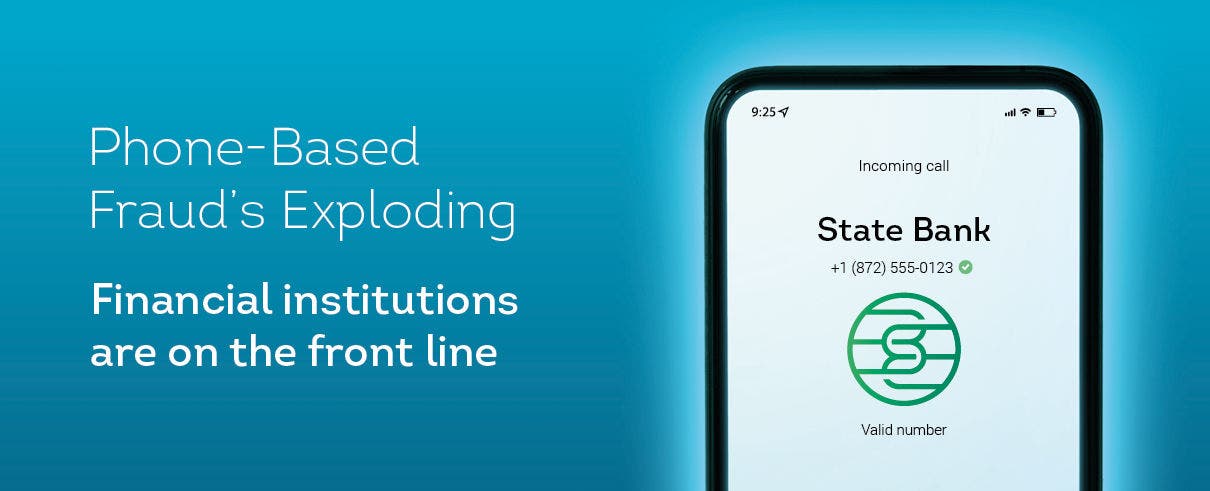
For financial institutions, the voice channel remains a critical channel for enhancing engagement, providing customer service and increasing revenue. But that channel is under pressure. Rising impersonation scams, call spoofing and AI-driven fraud are making it harder for financial firms to reach customers. And when trust breaks down — calls go unanswered.
Learn how phone-based fraud is evolving and how financial institutions can strengthen trust while protecting consumers and their brands from fraud.
View the infographic to learn:
- How the rapid growth of call spoofing, impersonation scams and fraud are being driven in part by advances in AI and deepfakes
- Why the voice channel remains a primary channel for both customer engagement and fraudulent scams
- Where financial institutions lag in implementing spoofing protection and call authentication solutions
- The features finance firms consider most important for outbound calls, including verified name, logo and reason for the call, and an indication the call was authenticated
Why voice-based fraud matters
Financial institutions sit on the front line of fraud. The scale of the issue is increasing, with billions in consumer losses tied to impersonation scams and projections showing continued growth driven by more sophisticated attack methods.
At the same time, the phone remains essential. Decision-makers consistently rank it as a top outbound channel — especially for personal, urgent or complex interactions. Customers also show a clear preference for phone communication when fraud is suspected, reinforcing its role in critical moments.
This creates a gap between reliance and trust. Many institutions have yet to implement effective protections against spoofing or mislabeling, even as customers expect greater transparency.
Closing that gap can drive measurable outcomes. When customers can clearly see who’s calling and why, they’re more likely to answer and trust the interaction. Authenticated, branded calling helps improve engagement and reduces the likelihood of fraud — while spoofed call solutions enable organizations to sign their own calls, blocking spoofed calls before they reach consumers.
Download the financial services voice-based fraud infographic to explore current trends, along with solutions and steps financial firms can leverage to restore trusted customer communication.
Related Insights



Related Solutions



Related Industries

Do you have questions? Our team is ready to help.

Information for Good®.
Connect with us


