

Key Takeaways:
- Refinancing may be a good option if you can get a lower interest rate
- Refinancing can enable you to change your loan term, such as shortening the duration to pay off the mortgage faster
- Refinancing can help you consolidate your debt and allow you to change the type of mortgage loan you have
- Consider holding off on refinancing if you plan on moving soon, you are saving up for a new home, you don’t have enough home equity, or you’re almost done paying off your current mortgage
- Be sure to review market rates, your credit score, and how long you plan to stay in your home before refinancing

Disclosure:
This post only contains educational information. No financial, tax or legal advice.
This information is for educational purposes only and we do not guarantee the accuracy or completeness of this information. This information does not constitute financial, tax or legal advice and you should consult your own professional adviser regarding your situation. This website may contain links to third party websites. We are not responsible for their content or data collection. Trademarks used in this material are property of their respective owners and no affiliation or endorsement is implied.
Mortgage refinancing is the process of replacing your current home loan with a new one to secure better terms that align with your financial goals. Timing is crucial - it can help you lock in a lower interest rate, reduce monthly payments, or both.
Before refinancing, consider market conditions, your financial health, and personal goals. It’s often ideal when interest rates are lower than your current rate, or when your credit and income have improved since your original loan.
But how do you know if now is the right time? Let’s break down the key signs when it might be time to refinance and what you may want to consider before making the move.
Remember:
Refinancing is a personal decision and consulting a mortgage professional for guidance and a tailored assessment would best help you decide what's right for you.
You can get a lower interest rate
The biggest sign that it might be a good time to refinance is if you can get a loan with a lower interest rate than the one you currently have. To find out if you can do this, research different lenders and compare their offers to your original mortgage, as well as monitor market trends for favorable rates.
Getting a new mortgage loan with a lower interest rate can help you save on monthly payments. Generally, a potentially good time to make the switch is if interest rates are at least 1% lower than your current loan.
But note, the decision to refinance is a big one and it may not make sense to “rate chase” to swap into a loan with a marginally lower interest rate. Because of the time, effort, and expense (such as origination fees, appraisal fees, title insurance, etc..) that is involved in refinancing, the rate savings may not outweigh the costs.

Pro Tip:
Consider using a mortgage calculator to help you calculate your loan costs.
Your credit is in better shape
If your credit health has improved since you took out your original mortgage, you may be in a stronger position to get approved for a loan with terms and rates that are more attractive. A better credit profile can result in:
- Lower interest rates
- Better loan terms
- Greater borrowing power
Improved credit enhances your ability to qualify for a mortgage with more favorable terms, which can save you money through reduced interest costs and provide access to more financial opportunities.
Debt-to-Income Ratio (DTI) Matters Too
Lenders also favor borrowers that have low debt-to-income ratios (DTI) when evaluating refinance applications. A lower ratio signals financial stability and increases your chances of approval. Improving your DTI can not only help you qualify but also unlock better loan options.
The DTI requirements may vary between lenders, but many set limits around 35% or lower according to LendingTree. While it’s possible to refinance with a higher DTI, keeping your ratio low gives you the best shot at competitive rates and terms.
You want to consolidate debt
A cash-out refinance can be an effective way to consolidate debt because it allows you to tap into your home equity and replace your existing mortgage with a larger one. The difference between your old loan balance and the new mortgage amount is paid to you in cash, which you can use to pay off high-interest debts like credit cards or personal loans.
Essentially, you are converting a portion of your home’s value into accessible funds – often at a lower interest rate than other borrowing options.
Note:
For this kind of refinance, you’ll likely need to have sufficient equity in your house. In general, the maximum loan amount is 80% of your home’s value. So, you’d need (typically at least 20%) in home equity to qualify.
Here’s a quick example of how a cash-out refinance works:
Cash‑out Refinance (Example)
This example shows how home value, mortgage balance, and equity determine the maximum cash-out amount available in a refinance.In the above example, the homeowner has 25% equity in the house with a mortgage balance of $300,000. This scenario has a max cash-out loan of 80% loan to value (LTV). Therefore, the homeowner qualifies for a loan up to $320,000 in this case.
Now the borrower can convert a portion of the $320,000 loan into cash by taking out a new mortgage loan for $300,000 and the excess $20,000 is paid out as cash.
Consolidating high-interest debt into your mortgage can offer several advantages:
- Lower interest rates: Mortgages, secured debt, typically have lower interest rates than unsecured debt like credit cards or personal loans.
- Streamline budgeting: Combining multiple debts into a single monthly payment streamlines your finances and reduces the hassle of juggling different due dates and amounts.
- Predictable payments: Opting for a fixed-rate refinance locks in your payment amount, providing stability and easier long-term planning.
- Lower credit utilization: Paying off credit card balances reduces your utilization ratio, which can positively impact your credit score.
You want to change the type of loan
Changing your loan type during a refinance can help you better align the terms with your financial goals, especially if your situation has evolved over the years.
To change your loan type, assess the kind of loan you have and explore alternative loan types and their advantages. For example, you may want to change from an adjustable-rate mortgage (ARM) to a fixed-rate mortgage (FRM) or vice versa.
ARMs interest rates are variable, but often start with a low introductory fixed rate. Once the introductory period ends, rates can adjust upward—sometimes significantly—making monthly payments less predictable. Swapping your ARM for a FRM could make sense when rates are on the rise. Refinancing into a fixed-rate mortgage could shield you from potentially higher interest rates in the future and lock in predictable payments.
Private Mortgage Insurance (PMI) is typically required when your LTV ratio is above 80%, meaning you have less than 20% equity in your home. PMI adds extra cost to your monthly payment. Refinancing can help you remove PMI if your home’s value has increased or you’ve paid down enough of your mortgage to hit that 80% threshold.
Here’s how it works:
- When you refinance, the lender reassesses your home’s current value and your remaining loan balance.
- If your new LTV is 80% or lower, PMI is no longer required on the new loan.
- This can reduce your monthly payment and save you hundreds—or even thousands—over time.
Pro Tip:
Consumers may be able to request PMI cancellation without refinancing once their loan balance naturally reaches 78% LTV.
You want to change your loan term
Depending on your financial situation, you may want to change your mortgage loan term, whether it’s shorter or longer —usually 15 and 30-year terms.
Swap into a shorter loan term:
If your income has recently increased and you can afford higher monthly payments, refinancing into a shorter-term loan—such as moving from a 30-year mortgage to a 15-year mortgage—can save you a significant amount of money over time.
Why does a shorter loan cost less in interest? Shorter loans carry less interest overall because you’re paying off the principal faster. It’s simple: the faster you pay off the principal, the fewer months interest has to accumulate. Even if the interest rate stays the same, a 15-year loan has only 180 payments compared to 360 on a 30-year loan. That means less total interest paid over the life of the loan.
To see how a shorter loan results in less interest paid, go use our amortization calculator to compare how much interest you’d pay on a 30-year loan versus a 15-year loan. You’ll see how a shorter term can dramatically reduce your overall cost.
Note:
Since the loan is shorter, it will be less risky for banks and may result in a lower interest rate. You can also own a home outright sooner.
For example, for a mortgage that costs $500,000 at a 7% interest rate, there are notable differences in monthly payments, interest paid and the total mortgage cost.
| Mortgage Term In Years |
Mortgage Interest Rate |
Monthly Mortgage Payment |
Total mortgage Interest |
Total Mortgage Cost |
|---|---|---|---|---|
| 15‑year | 7% | $4,494 | $308,965 | $808,965 |
| 30‑year | 7% | $3,327 | $697,985 | $1,197,985 |
In this example, the 15-year mortgage requires that you pay a higher monthly payment (+$1,167 per month). But that translates into saving nearly $390K throughout the loan and the house is owned 15 years sooner.
Another scenario where a loan term change could be contemplated is when interest rates drop enough to keep roughly the same payment amount but swap into a shorter loan. The rationale is to pay off the loan sooner and save money.
| Mortgage Term In Years |
Mortgage Interest Rate |
Monthly Mortgage Payment |
Total mortgage Interest |
Total Mortgage Cost |
|---|---|---|---|---|
| 15‑year | 2.5% | $3,334 | $100,110 | $600,110 |
| 30‑year | 7% | $3,327 | $697,985 | $1,197,985 |
In this case, the monthly payments are nearly equal for both the 15 year and 30-year mortgage loans. This is because the 15-year loan has 5.5% lower interest rate compared to the 30-year loan. As a result, the 15-year loan carries $597K+ less total out-of-pocket cost over the life of the loan.
Swap into a longer loan term:
Alternatively, if you have a short-term loan and you’ve experienced some financial challenges, a longer-term loan can give you more time to pay off your mortgage with lower monthly payments. You can also look into loan forbearance if you’re struggling with payments.
When to hold off on refinancing
While refinancing can be beneficial in many situations, there are times when it might be wise to hold off. Here are some situations where waiting might be the better choice:
- You’re saving for a new home: Refinancing comes with closing costs -typically 2%-6% of the total loan. This could reduce the funds you are setting aside for a down payment on your next home.
- You want to move soon: If you expect to sell your home in the near future, you may not stay long enough to recoup the refinancing costs. The break-even point—the time it takes for savings to outweigh closing costs—could be years away.
- You have low home equity: If your home has not gained much equity since you obtained your mortgage, you may not qualify for favorable refinancing terms. Lenders often require a certain level of home equity to offer competitive rates, at least 20%. Waiting until you have built more equity may result in better refinancing options.
Considerations to know before you refinance
To refinance or not to refinance? Now or later? These questions may be on many homeowners’ minds as they think about their mortgages. If you think now may be a good time to refinance, look at these considerations first.
4 factors to review before refinancing your mortgage

Look at current interest rates

Review your credit report and score

Determine how long you want to stay at your home and new loan costs

Explore the types of refinance programs
Look at current interest rates
Mortgage rates go up and down all the time, so looking at the current market can help you secure a lower interest rate, which reduces your monthly payments and overall interest costs. According to Fannie Mae, mortgage interest rates are expected to decrease from 6.4% at the end of 2025 to 5.9% at the end of 2026.
Review credit report and score
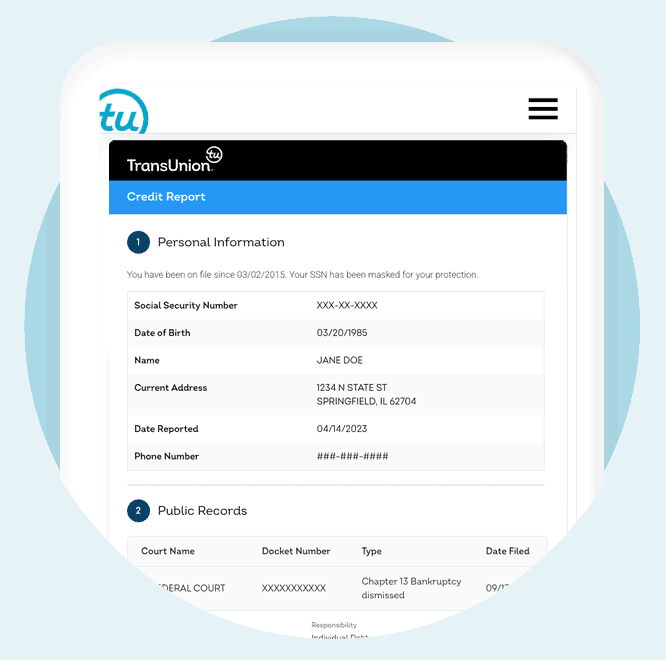
Before refinancing, review your credit report and score to see if it’s in good shape. This helps you understand your current credit health and spot any errors that could hurt your chances of getting a good rate.
Why it matters:
Your credit score plays a big role in refinancing. Generally, the better your score, the lower the interest rate you’ll qualify for. For a conventional mortgage, most lenders look for a score of at least 620. A good score ranges from 661–780, and an excellent score is 781 or higher. If your score is lower, you might still qualify for government-backed loans like Federal Housing Authority (FHA), Veterans Affairs (VA), or United States Department of Agriculture (USDA).
Your credit score affects how much you pay over time—better scores can save you thousands of dollars. To improve your score, pay bills on time, lower your debt, and avoid applying for new credit right before buying a home.
Note: Lenders use a variety of credit scoring models that are based on complex algorithms to assess creditworthiness. There are many credit scoring models, as banks and other financial institutions develop industry-specific models to gauge risk.
If your credit isn’t where you’d like it to be, it may make sense to hold off on refinancing so you can work up to better credit health.
Pro Tip:
Refinancing will involve a hard credit pull. This will typically temporarily lower your credit score.
Determine how long you want to stay at your home and new loan costs
If you’re planning on selling your home soon, the monthly savings you’d get from refinancing may not be worth the up-front closing costs.
These loan costs typically include fees such as:
- Appraisal
- Underwriting
- Title services
- Origination charges
- Prepaid taxes and insurance
- Other fees
As mentioned above, refinancing closing costs can range between 2%-6% of the total loan amount. Make sure that you weigh the potential benefits against these loan costs. It takes time to recoup the refinancing costs incurred, and in the end it may not be worth it.
Be sure to calculate your break-even point to determine if a refinance will make sense for your situation. The break-even point is the amount of time when the savings on the new loan will exceed the closing costs.
Total refinance costs / monthly savings = # of months to break even
Break-Even Refinancing Example:
This section shows how long it takes for refinancing savings to offset upfront refinancing costs.- Your total refinancing costs: $6,000
- Your new monthly payment savings: $150
- Break‑Even point is: 40 months
If you plan to stay in your home long-term, refinancing is more likely to pay off — the monthly savings can eventually outweigh the upfront costs.
Explore the types of refinancing
Understand the different refinancing options to help you align the right loan to your goals. Some of the most common types include:
- Lower your interest rate: Refinance to secure a lower rate and reduce your monthly payments, saving money over time.
- Change your loan term: This is to change the length of the loan, potentially to pay off the loan faster.
- Change your loan type: Switch to a different type of loan that better suits your needs, such as moving from an adjustable-rate mortgage to a fixed-rate mortgage.
- Cash-out refinance: This allows you to take out equity on your current mortgage to cover other costly expenses
- Streamline refinance programs: These programs streamline the process for government FHA, VA, and USDA loans by reducing the amount of documentation and potentially skipping the appraisal process
How TransUnion free credit monitoring can help you
When considering mortgage refinancing, your credit health is one of the most important factors lenders evaluate. A stronger credit profile can help you qualify for lower interest rates and better loan terms—potentially saving you thousands over the life of your loan.
TransUnion’s free credit monitoring service helps you stay informed and in control of your credit by offering:
- Daily updates to your TransUnion credit report
- Alert notifications about critical changes to your credit report, such as new accounts, hard inquiries, or late payments
- Access to offfers from Bankrate*, so you can explore refinancing or other financial products
By monitoring your credit regularly, you can be better positioned to refinance when your health is at its strongest—maximizing your chances of securing favorable terms. And since the service is completely free and doesn’t require a credit card, it’s an easy way to stay proactive about your financial future.
Frequently asked questions about refinancing a mortgage
There’s no legal limit, but lenders may have waiting periods. Just make sure the benefits outweigh the costs each time.
It’s possible, but you may face higher interest rates. Before your refinance, you could benefit from taking steps to make your credit healthy such as focusing on making on time payments, paying down debt, and keeping your utilization low. Using tools like TransUnion’s credit monitoring could be of help.
Refinancing may cause a small, temporary dip in your credit score due to the hard inquiry, but the impact is usually minor.
Yes. Closing costs typically range from 2% to 6% of the loan amount. Factor these into your decision to ensure refinancing makes financial sense.
Typically, 30–45 days, depending on the lender and your financial situation.
You’ll typically need recent pay stubs, W-2s or tax returns, bank statements, proof of homeowners insurance, and information about your current mortgage. Lenders may also request additional documentation depending on your financial situation.