Skip to report section
Explore the Sections of Your Credit Report
Checking your credit report regularly is one of the foundations of healthy credit. This guide shows you how to read each section and know what to look for. In addition to the guide below, we've created a sample credit report for you to view and print.
The data provided is meant for example only and does not pertain to any specific individual. This tool is for educational purposes only. There may be differences in how information is presented depending on where you receive your credit report.
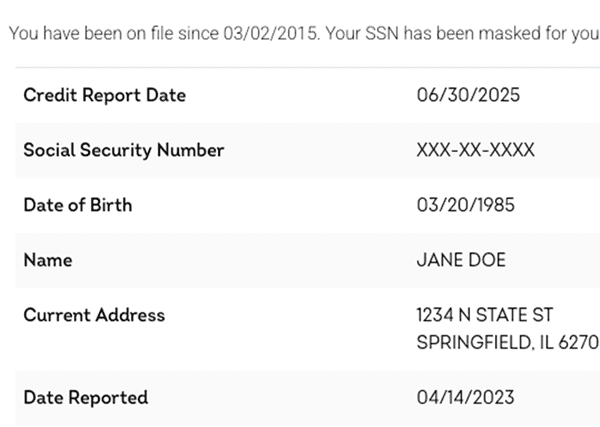
This section lists the personal details that lenders use to verify your identity.
What it is
Your names, addresses, phone numbers, date of birth, Social Security number and employer information.
What to look for
- Make sure your name, address and phone number are correct and current.
- Confirm that your Social Security number and date of birth match your records.
- Watch for unfamiliar addresses, phone numbers or employers that may signal an error or identity theft.
Details & tips
Your personal information section includes your current and past names, addresses, phone numbers, date of birth, Social Security number and employer history. This information may be updated based on what you provide to lenders during applications, details you give directly to TransUnion, or when you submit a dispute.
Even small errors, like a wrong address or misspelled name, can signal reporting mistakes or possible identity theft.
Make sure everything is accurate to avoid mix-ups and help maintain a clean, correct credit file.
While deleting phone numbers, an employer, or an old address can be done online, changes to your name, date of birth, Social Security number, or adding a new address require sending supporting documents by mail.
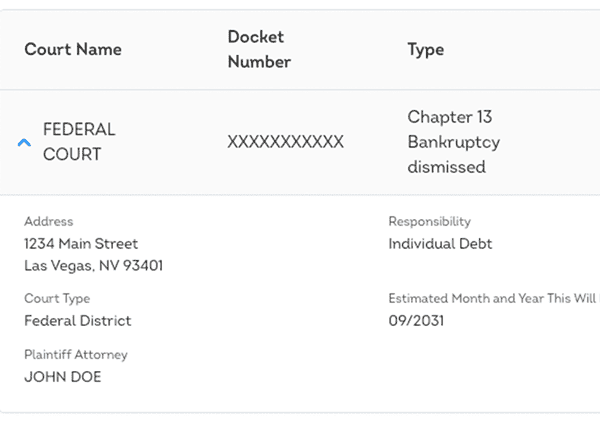
This section shows any bankruptcy records listed on your credit report.
What it is
Public court records for Chapter 7 or Chapter 13 bankruptcies. Though less common, Chapter 11, which is used by businesses, and Chapter 12 bankruptcies, which applies to family farmers, can also be listed here if applicable.
What to look for
- Check that the bankruptcy type is correctly listed.
- Verify the filing date, as it determines how long it will remain on your report.
- Ensure the public record belongs to you and not someone with a similar name.
How this impacts your credit score
Bankruptcies can have a severe, negative impact on your credit score. However, your score can still improve with bankruptcies on your report, as their impact tends to lessen over time. Rebuilding your credit health is possible — it just takes time and consistent good habits.
Details & tips
The “Public Records” section of your TransUnion credit report contains bankruptcy filings from court records. It will show the type (Chapter 7 or Chapter 13) and the filing date. If applicable, Chapter 11 or Chapter 12 bankruptcies will appear here too. Chapter 7, Chapter 11, and Chapter 12 bankruptcies typically remain on your credit report for 10 years from the filing date, while Chapter 13 bankruptcies generally stay for seven years.
As you learn how to read a TransUnion credit report, double-check that the bankruptcy type and dates match your court documents exactly. Incorrect information should be disputed.
This section lists your credit accounts and key details about them.
What it is
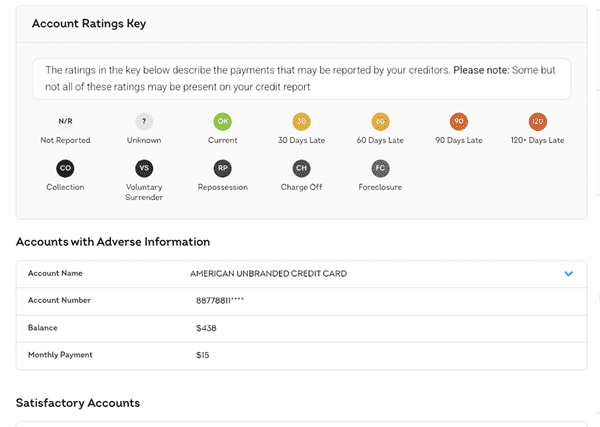
This section provides a key that can help you understand your account information. The sections below list your credit accounts and key details about them.
What to look for
- Review account names to confirm they’re yours and accurate.
- Watch for accounts you don’t recognize, which could be a sign of fraud.
- Check payment history for accuracy (missed or late payments should match your records).
How this impacts your credit score
Your account information plays a major role in your credit score. Payment history, balances, credit limits, and whether accounts are open or closed all factor into how your credit score is calculated.
Details & tips
The “Account Information” section contains details about your open and closed credit accounts, including revolving accounts (credit cards, lines of credit) and installment loans (mortgages, auto loans, student loans). It lists the lender’s name, balance, credit limit or loan amount, payment history, and account status (open, closed, paid, deferred, etc.).
The ratings in the key describe the payments that may be reported by your creditors. Some, but not all, of these ratings may be present on your credit report.
When reviewing this section, confirm that all accounts belong to you and that details like balances, credit limits and payment histories are accurate. Lenders tend to provide updates once a month.
If you don’t recognize a lender’s name, it may be a loan servicer or a company that bought your account. If you’re still unsure, you can contact the lender directly using the number listed in the account information.
This section shows accounts with late payments, defaults or collections.
What it is
Accounts that are past due, delinquent, in default or sent to collections. These may include late payments, charge-offs or accounts marked as “closed by creditor.”
What to look for
- Check that every adverse account is truly yours.
- Confirm late payments or delinquency dates match your records.
- Watch for fraudulent accounts that could have been opened in your name.
How this impacts your credit score
Missed payments are a major credit score factor. Adverse information like late payments and collection accounts will typically remain on your credit report for up to seven years from the date of the first delinquency.
Details & tips
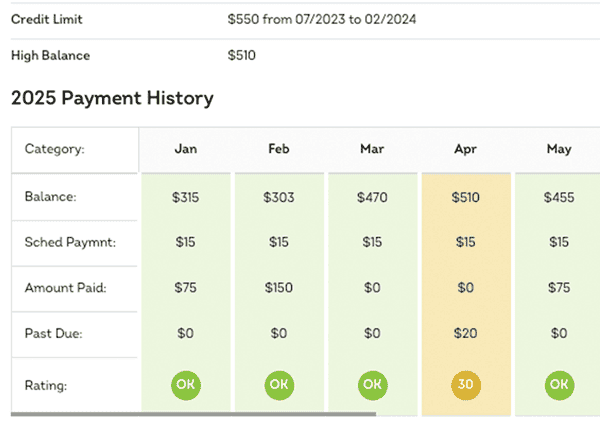
The “Accounts With Adverse Information” section lists credit accounts that have been reported as delinquent, in default, or sent to collections. These accounts may be open or closed.
If you see an account you don’t recognize, it could be due to identity theft. If you see account information that is incorrect or a result of fraud, you should submit a dispute.Payment history is one of the most important factors in your credit score, so missed or late payments in this section will likely have a significant impact. Missed payments can stay on your report for up to seven years from the date of the original delinquency. Over time, consistent on-time payments on your accounts can help you build a healthy credit history.
This section highlights accounts that are in good standing, whether open or closed.
What it is
Current and closed accounts reported as “OK” or paid on time, including credit cards, mortgages, student loans, auto loans and sometimes utilities or rent.
What to look for
- Verify that balances and payment statuses are correct.
- Make sure recent payments are reflected (updates may take up to 30 days).
- Confirm account names are familiar, even if the lender name has changed.
How this impacts your credit score
Your payment history and revolving balances play key roles in your credit score. A pattern of on-time payments helps your score, while high credit utilization on revolving accounts can lower it. Aiming for credit usage under 30% of your total credit limit is a good start, but the lower the better.
Buy now, pay later (BPNL) loans don’t currently affect scores based on TransUnion data, but in the future, lenders and some scoring models may begin factoring BNPL activity into credit decisions.
Details & tips
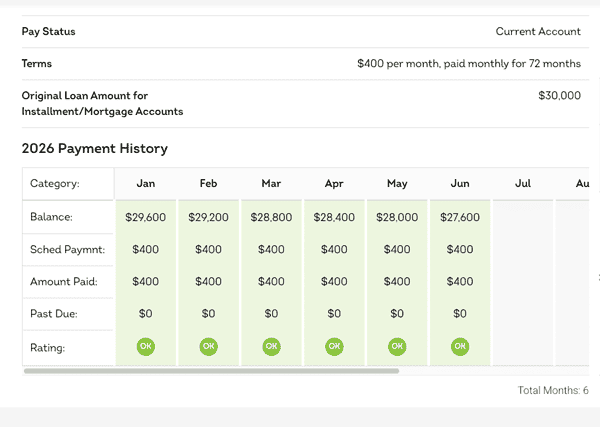
The “Satisfactory Accounts” section of your TransUnion credit report lists credit cards, loans and mortgages that were paid on time and met the lender’s terms. It can also include closed accounts that were in good standing, which may stay on your report for up to 10 years.
A lot of green “OK” marks show strong credit habits. If you recently paid off a balance and it isn’t reflected in your report, look for the line that reads "Date Updated." Your lender may not have provided updated information to reflect the change in your balance yet. It can take up to 30 days after the payment is made for the balance to be updated on your report.
If you see an unfamiliar account name, it might be a lender’s parent company or a loan servicer. Even though these accounts reflect positively on your credit report, make sure the details are accurate and updated.
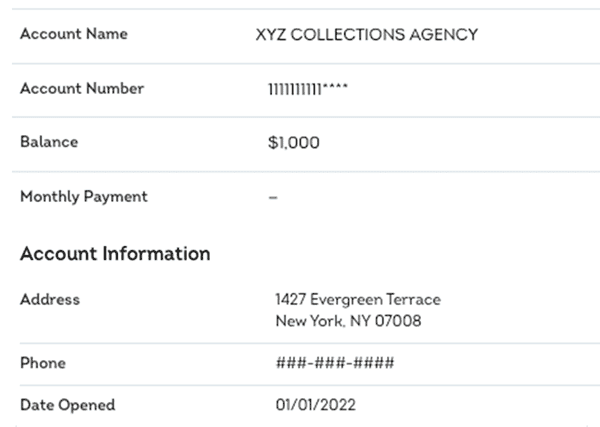
This section lists accounts that are in collections.
What it is
Debts that are seriously past due and may now be managed by a collection agency or debt buyer.
What to look for
- Confirm the original creditor and collection agency are correctly listed.
- Check all balances (medical debts under $500 or paid medical collections should not appear).
- Note the date of first delinquency, as it sets how long the account stays on your report.
How this impacts your credit score
If you have an account in collections, you’ve likely missed several payments on the account. Late payments can have a significant, negative impact on your credit score. When a collections account appears on your credit report, it can further impact your credit score.
Details & tips
An account may go to collections when a company is attempting to collect money for an account that is past due. The original creditor may try to collect the balance or may have sold the debt to a third-party collection agency.
If the original company is attempting to collect the debt, the account information will show the phrase “In Collections.” If the creditor sold the unpaid debt to a third-party company, that company will now be reporting the account to TransUnion.
In your TransUnion interactive credit report, collections appear in their own section and typically remain for seven years from the date of the original missed payment. On credit reports you receive from TransUnion by mail, you may find collections accounts in the Accounts with Adverse Information section.
Medical collection debt with an initial reported balance under $500, or paid medical collections, no longer appear on credit reports. Unpaid medical collections show up only after a year of being unpaid to allow time for insurance or payment plans, and some states have additional laws regarding medical debt.
If you don’t recognize a debt, contact the collector for verification, as it may be a case of mistaken identity or fraud.
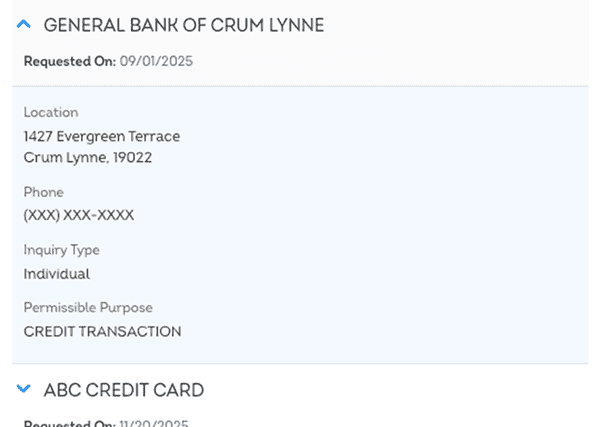
This section lists hard inquiries tied to your credit applications.
What it is
Hard inquiries appear when someone accesses your TransUnion credit report in connection with an application for credit.
What to look for
- Review companies listed and confirm they align with your applications.
- Check the date of each inquiry (they should fall off after two years).
- Watch for inquiries you don’t recognize, which may signal fraud.
How this impacts your credit score
Hard inquiries can negatively impact your credit score. When rate shopping for a car or mortgage loan, grouping your applications can help reduce the credit score impact. While they don’t affect your score as much as missed payments or high balances, it's still good to be mindful of hard inquiries.
Details & tips
The “Regular Inquiries” section lists all hard inquiries from lenders, credit card issuers or other companies through which you applied for credit. Each entry shows the requesting company’s name, contact information, and the date the report was accessed. Lenders can only access your report if they have a permissible purpose, meaning they’re legally allowed for certain purposes. Soft inquiries, like promotional inquiries and account review inquires, have their own dedicated sections on your TransUnion credit report and are not included here.
Hard inquiries can remain on your TransUnion credit report for up to two years, though their effect on your score typically lessens over time.
Many credit checks in a short time can hurt your score, but credit scoring models may bunch inquiries of the same type (mortgage applications, auto loans) as one inquiry if they are made in a short time period.
If you see an inquiry you don’t recognize, a good first step is to contact the lender directly.
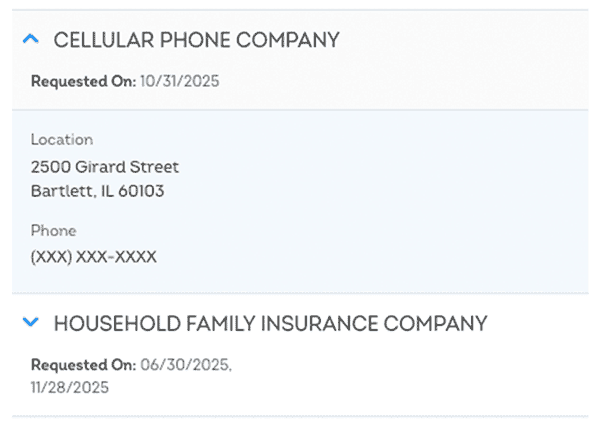
This section shows soft inquiries for pre-approved credit or insurance offers.
What it is
Soft pulls by companies sending you promotional or pre-screened credit and insurance offers.
What to look for
- Expect to see companies that sent you pre-approval letters.
- Know that only you can see these inquiries on your credit report.
- These inquiries do not impact your credit score.
How this impacts your credit score
Promotional inquiries are a type of soft inquiry that can only be seen by you, don’t affect your credit score, and remain on your credit report for up to two years.
Details & tips
The “Promotional Inquiries” section lists companies that have accessed limited information from your credit file. A company may use the information to determine if you qualify for a credit or insurance offer.
Promotional inquiries are soft inquiries, so they do not impact your credit score and are only visible to you. Promotional inquiries remain on your credit report for one year.
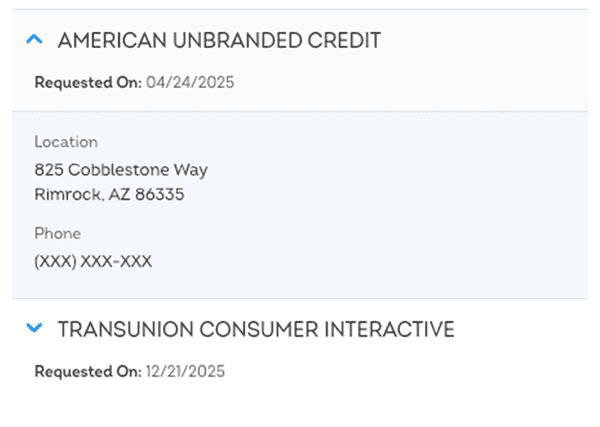
This section lists soft inquiries that occur when you or companies you have a relationship withreview your report.
What to look for
- Expect to see lenders, insurers, landlords, or employers listed.
- Account review inquiries can remain on your credit report for two years.
- Having multiple soft inquiries on your credit report is not a poor reflection of your credit health.
How this impacts your credit score
Like promotional inquiries, account review inquiries are soft inquiries which do not impact your credit score.
Details & tips
The “Account Review Inquiries” section lists soft inquiries from companies checking your credit for purposes other than extending new credit. Examples include lenders reviewing an existing account, insurers underwriting a policy, employers conducting background checks, or landlords screening rental applicants.
You may also see entries from when you access your own credit report. Only you can see all the soft inquiries on your credit report. These soft inquiries don’t affect your score.
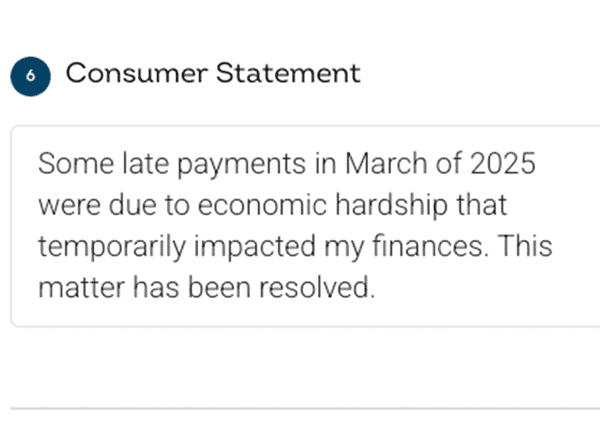
This section allows you to add context to your financial history.
What it is
A short personal statement explaining circumstances such as financial hardship or identity theft. You also have a right to use this section if you a dispute you submitted was not resolved satisfactorily.
What to look for
- Review the statement you’ve added for clarity and accuracy.
- Avoid including sensitive personal or medical details.
- Remember: all lenders reviewing your report will see this statement.
How this impacts your credit score
Adding or removing a consumer statement does not impact your credit score.
Details & tips
The “Consumer Statement” section allows you to add a personal note about your financial situation. If you are experiencing a financial hardship related to your personal circumstances, you can add a consumer statement to your credit report to explain your situation. This gives you a way to provide context for something in your credit history.
You can choose from pre-written options or write your own, but avoid including sensitive personal details, medical information, or human trafficking victim status.
Consumer statements are visible to anyone who views your credit report and may give lenders additional context when evaluating your application.
While adding or removing a consumer statement doesn’t affect your credit score, it may give lenders additional context when reviewing your application. Update your statement if your situation changes.
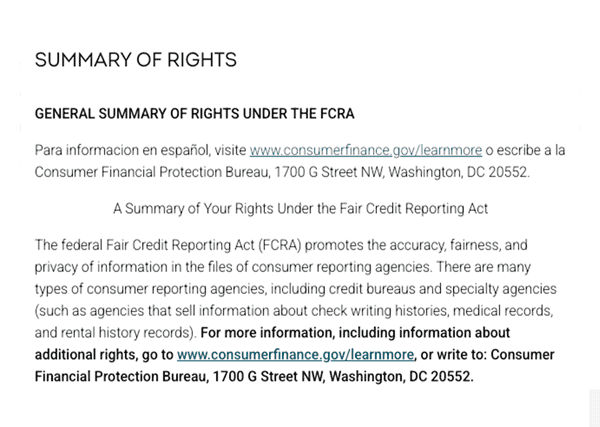
This section outlines your consumer rights under federal and state law.
What it is
This section provides an overview of your rights under the Fair Credit Reporting Act (FCRA), a federal law that protects your credit information, and additional state-specific protections.
What to look for
- Review your right to dispute inaccurate or incomplete information.
- Check for state-specific rights that may apply.
- Understand that this section is informational and does not affect your score.
How this impacts your credit score
The “Summary of Rights” section does not impact your credit score.
Details & tips
The “Summary of Rights” section explains your protections under the federal Fair Credit Reporting Act (FCRA) and, in some cases, additional rights granted by your state.
These rights let you get your credit report for free, fix or dispute incorrect information, and find out if your report was used to deny you credit, insurance or a job. You also have the right to place fraud alerts or security freezes on your file.
When learning how to read your credit report, reviewing this section is essential because it outlines the protections that give you control over your personal data.
If you find incorrect or outdated information on your report, use the dispute process outlined by the credit bureau to request corrections.
Review this section to stay up to date on your rights, which can differ by state. You need to submit a dispute with each credit bureau individually:
TransUnion: TransUnion Disputes
Equifax: Equifax Disputes
Experian: Experian Disputes
See the Full Sample Report
View a complete sample credit report with labeled sections for reference.
Explore More Credit Resources
Checking your free credit report from TransUnion is just the first step. Explore more tools to build and protect your credit.