Infographic

Restoring Confidence in Government Outreach
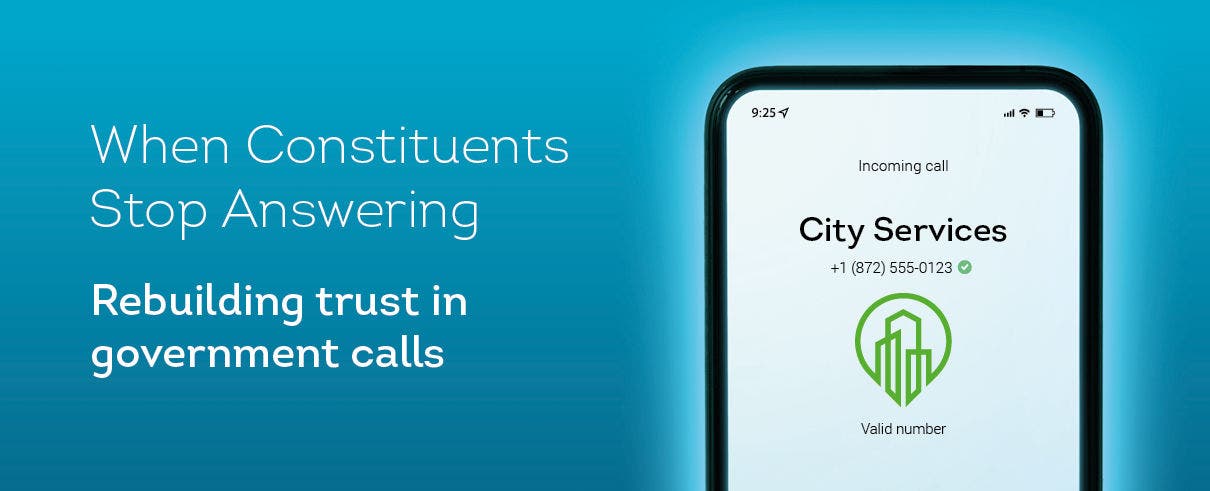
Government agencies rely on phone outreach to deliver essential services. But rising impersonation scams and call spoofing have changed how constituents respond. When people don’t trust who’s calling, they avoid answering — even when the issue is urgent, personal or complex.
Learn how phone-based fraud is reshaping constituent behavior and what agencies can do to improve experiences and restore trust in every interaction.
View the infographic to learn:
- Why the phone remains a primary channel for fraudsters targeting consumers
- The growing scale of government impersonation scams and related financial losses
- How declining trust is negatively impacting engagement and constituents’ experiences
- When phone communication is still critical (e.g., for emergencies and public service updates)
- Which branded calling and authentication features agencies believe are most important to improve engagement
Why phone-based fraud matters
Government agencies must balance accessibility with security. The data shows fraud is not only increasing in volume but also in impact —with reported losses from government scams rising significantly year over year.
At the same time, constituents expect more from their interactions. Many now compare public sector experiences to those delivered by the private sector — and want clarity about who’s contacting them and why.
This creates a clear challenge: While the phone remains essential, especially for urgent situations like natural disasters or time-sensitive issues, trust in incoming calls continues to decline.
Verified, branded calling helps close that gap. By displaying agency name, logo and call intent at the point of contact, along with authenticating the call, agencies can enhance engagement, reduce fraud risk and deliver more transparent, reliable experiences for constituents. In addition, call spoofing solutions help minimize fraud by blocking spoofed calls before they even reach constituents.
Download the government phone-based fraud infographic to explore current trend and actionable insights that can help agencies improve constituent engagement.
Related Insights:
Video: Transform Federal Agency Contact Centers for Efficienct and CX
Infographic: Spoofed Call Protection
Related Solutions:
Do you have questions? Our team is ready to help.

Information for Good®.
Connect with us


