

Key Takeaways:
- Your payment history is the most important credit score factor.
- Late payments will stay on your credit report for seven years from the date of the first delinquency.
- While a late payment negatively impacts your credit score, you can build healthy credit by making consistent on-time payments.

Disclosure:
This post only contains educational information. No financial, tax or legal advice.
This information is for educational purposes only and we do not guarantee the accuracy or completeness of this information. This information does not constitute financial, tax or legal advice and you should consult your own professional adviser regarding your situation. This website may contain links to third party websites. We are not responsible for their content or data collection. Trademarks used in this material are property of their respective owners and no affiliation or endorsement is implied.
You have so many things to think about in your day-to-day life, you’re naturally going to forget something. Most of the time they’re harmless, like a birthday note you forgot to send or a text message you forgot to reply to. But occasionally, something important, like a bill that’s owed, can slip through the cracks.
Understanding how long late payments stay on your credit report, how they can impact your credit score and how you can respond if you do miss a payment, will help you protect your credit health and potentially avoid setbacks in the future.
Your payment history is an important credit score factor
There are different credit scoring models and they may weigh credit score factors differently, but one factor is consistently more influential than others: your payment history. Your payment history provides a month-by-month breakdown of your reliability as a borrower. Even just one missed payment can have an impact on your credit health.
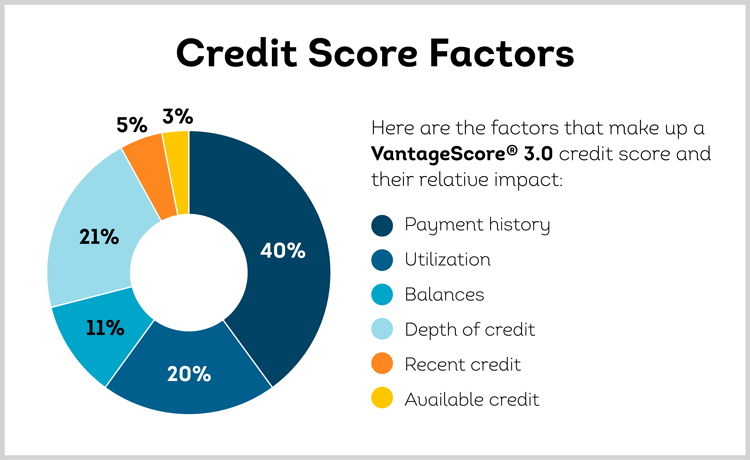
Your payment history makes up 40% of a VantageScore® 3.0 credit score, which is the scoring model used if you get a credit score directly from TransUnion®. Other scoring models may place less influence on payment history as a percentage, but your payment history tends to be the most important credit score factor across all models.
How long do late payments stay on your credit report?
A late payment will remain on your credit report until seven years from the date of the first delinquency.
Your credit score is not impacted by a late payment unless it is reported to the credit reporting agencies by your lender. Late payments are not typically reported immediately after you miss your payment due date. Generally, lenders report a missed payment when it is 30 days past due. That doesn’t mean it’s always OK to take 30 additional days to make your payment. Depending on the bill and the lender, you may be subject to late fees or other penalties even if the late payment isn’t reported to credit reporting agencies.
On your TransUnion credit report, late payments can be reported with the following ratings with your account information:
- 30 days late
- 60 days late
- 90 days late
- 120+ days late
If you have a payment that is reported as 30 days past due, your credit score can decline. If that same account rolls into 60 days past due, you may see another dip in your score. This is true if the payment remains unpaid after 90 and 120 days as well. Though, the initial credit score impact on the first time the late payment is reported is typically the most severe.
Similar to late payments, other forms of adverse information, like collections accounts, also remain on your credit report for seven years. Accounts in good standing will remain on your credit report for 10 years. While you may see a significant impact to your credit score when a late payment is reported, credit scores are more influenced by recent credit behavior, so the impact of individual late payments tends to lessen over time.
How late payments can impact your finances
Your credit score isn’t the only piece of information used by lenders to make credit decisions, but it, along with your credit history, can play a part in whether you’re approved for certain loans and the terms of those loans. A series of missed payments may make it more difficult to be approved for mortgages, auto loans and credit cards. In some cases, your auto insurance rates and your ability to rent an apartment may be impacted.
If you are approved for credit, a lower credit score can impact the terms and rates of your loan. For large purchases, like mortgages and auto loans, an increase in your interest rate means more money spent on each payment.

How to avoid late payments
If you want to protect your credit health by avoiding late payments, there are multiple things you can consider:
- Create a budget: Have a comprehensive look at where your money is going so you know what to prioritize each month.
- Set up automatic payments: If you know you will have enough to cover your payments each month, this will make sure you don’t miss something by accident.
- Turn on alerts: Your bank or lender may offer this as a free tool, but even if they don’t, you can set a reminder on your phone.
Creating a budget, even a simple one, can give you a good idea of not just where your money is going, but when. Do the due dates of your bills line up with when you get paid? Unfortunately, that’s not always the case. A budget can help you understand if you’re having a money shortfall or you need to better allocate your funds. You can consider contacting your lender to see if they will change your payment due date. Not all lenders provide this accommodation, but there are those willing to do so.
What to do if you miss a payment
Missing a payment can feel frustrating, but here are some steps to consider to get back on track:
1. Pay as soon as you can
- If you miss a payment for a bill, try to pay it as soon as possible.
- If you can pay before it is 30 days past due, you may be subject to fees, but your lender may not report it to credit reporting agencies, avoiding an impact to your credit score.
2. Contact your lender
- You can also contact your lender and explain your situation.
- This may not forgive the late payment, but if money is tight, they may have a financial hardship program to help you avoid missed payments going forward.
3. Check your credit report
- If you have a payment reported as late on your credit report, it will stay on your report for seven years.
- The credit score impact of the late payment will lessen over time until it falls off your report.
4. Focus on positive habits
- Consider automatic payments or reminders.
- Using your knowledge of the credit score factors, do your best to make healthy credit decisions going forward.
- Over time, positive credit habits will help you build a healthy credit history.
Should you pay your credit card multiple times a month?
Many people pay their credit card bill once a month, typically after they receive their credit card statement. However, some like to pay down their credit card multiple times a month. There may not be an impact on your credit score if you pay your credit card balance multiple times a month compared to once a month if you consistently pay your balance in full.
However, if you have large outstanding balances and paying multiple times a month helps you pay more than the minimum to pay it down, it can benefit your credit health. Paying down your debt can lower your credit utilization. Your credit utilization is a measure of how much credit you’re using compared to your available credit limit. Credit utilization is an important part of your credit score. Additionally, if you made a large purchase on a credit card and made multiple payments to your credit card account prior to the balance being reported to credit reporting agencies, this can prevent your utilization from increasing and negatively impacting your credit score.
If your payment dates are mismatched with your pay schedule, making two payments a month, bi-weekly with your paycheck, may make it easier to budget. If you do this, try to make at least the minimum payment due with your first payment. That way, if something unexpected happens and you can’t make the second planned payment, it won’t count as a missed payment. If you pay less than your minimum payment in your first payment and you miss your second payment, your lender may report it as a missed payment.

Pro Tip:
Be cautious about spending more. When you make a payment, you will free up more of your available credit limit, which can motivate you to spend more.
Consistent good habits build healthy credit
A late payment can be discouraging, especially when you see how it can impact your credit score. However, think of your credit history as a long-term portfolio. Eventually that late payment will be gone, and the good habits you build today will ultimately help you get the opportunities you deserve.