

Key Takeaways:
- A secured credit card typically requires a refundable security deposit to open an account.
- The deposit often helps determine the credit limit.
- Secured credit cards may be an option for people who are building or rebuilding credit.
- Some card issuers report account activity to credit reporting agencies, although reporting practices differ among providers.
- Like any credit card, secured cards can have fees, interest charges and other account terms that should be reviewed carefully before applying.

Disclosure:
This post only contains educational information. No financial, tax or legal advice.
This information is for educational purposes only and we do not guarantee the accuracy or completeness of this information. This information does not constitute financial, tax or legal advice and you should consult your own professional adviser regarding your situation. This website may contain links to third party websites. We are not responsible for their content or data collection. Trademarks used in this material are property of their respective owners and no affiliation or endorsement is implied.
If you're building credit, rebuilding after financial setbacks or looking for your first credit card, you may have come across secured credit cards.
A secured credit card works much like a traditional credit card, but it usually requires an upfront security deposit. Once the account is open, you can use the card to make purchases, receive monthly statements and make payments just as you would with many other credit cards.
For some consumers, a secured credit card may provide access to credit when other options are limited. But how much deposit do you need? Can a secured card help you build credit? And how do you know if it's the right choice for your situation? Read on to learn more about how secured credit cards work, their potential benefits and drawbacks, and what to consider before applying.
What is a secured credit card?
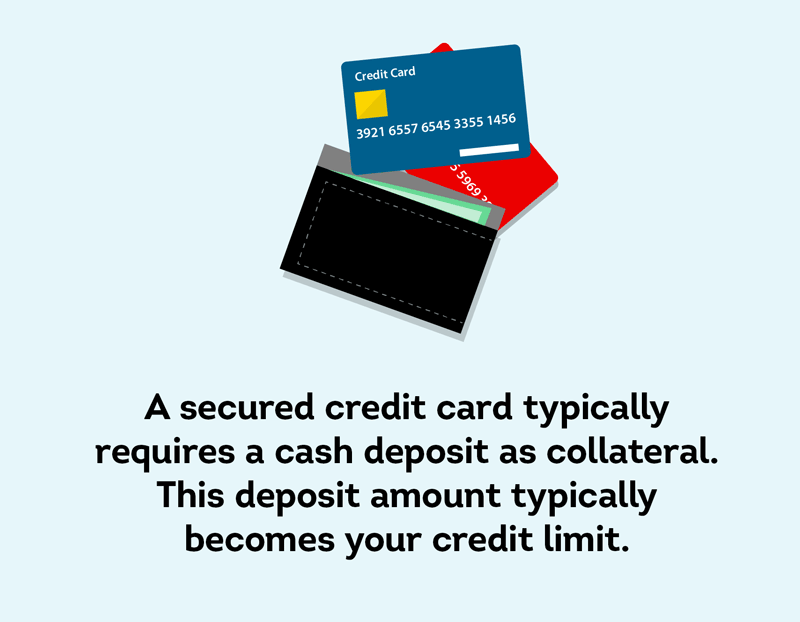
A secured credit card is a credit card that typically requires a refundable cash deposit when you open the account. The deposit serves as collateral for the card issuer and may help determine your credit limit.
For example, a $300 deposit may result in a $300 credit limit, although deposit requirements and credit limits vary by issuer.
Once the account is open, a secured credit card functions like many other credit cards. You can make purchases, receive monthly statements and repay what you borrow according to the card agreement.
Remember:
Your security deposit is separate from your credit card balance. You'll still need to make monthly payments for anything you charge to the card.
Common features of secured credit cards
Most secured credit cards share several common features:
Security deposit: You'll typically provide a refundable cash deposit to open the account. The deposit may help determine your credit limit and may be used according to the card agreement if the account is not paid as agreed.
Revolving line of credit:. As you make payments, your available credit is replenished and can be used again.
Monthly payments: Like unsecured credit cards, secured cards generally require monthly payments and may charge interest on unpaid balances.
Credit reporting: Some issuers report account activity to one or more credit reporting agencies. Reporting practices vary by provider.
Potential upgrades: Some card issuers periodically review accounts and may offer eligible cardholders the opportunity to move to an unsecured credit card.
How does a secured credit card work?
A secured credit card works much like a traditional credit card, with one key difference: you'll typically need to provide a refundable security deposit when you open the account.
Here's how the process generally works.
1. Apply for the card
You’ll start by submitting an application with the card issuer. Like other credit products, secured credit cards may have eligibility and underwriting requirements. Providing a deposit does not guarantee approval.
2. Make a security deposit
If your application is approved, you'll typically provide a refundable cash deposit before you can use the card. Deposit requirements vary by issuer and card.
The issuer may hold your deposit for as long as the account remains open. Check the card agreement to understand when your deposit may be returned and whether it can be used to cover unpaid balances.
3. Receive a credit limit
For many secured credit cards, the amount of your deposit helps determine your credit limit. In some cases, a larger deposit may qualify you for a higher limit, although issuer policies vary.
It's important to remember that your credit limit is the maximum amount you can borrow on the card. While your credit limit may be based on your security deposit, it may not be the same amount as your deposit.
4. Use the card for purchases
Once your account is active, you can typically use the card anywhere its payment network is accepted, as long as you stay within your credit limit and follow the card's terms.
Each purchase reduces your available credit until you make a payment.
5. Make payments and review your monthly statement
Like other credit cards, a secured card comes with a monthly statement that shows your balance, recent transactions, minimum payment, due date and any interest or fees charged.
Paying at least the minimum amount due helps keep your account in good standing. If your card offers a grace period, paying your statement balance in full by the due date may help you avoid interest charges on purchases.
6. Build a history of account activity
Some secured-card providers report information to one or more credit reporting agencies. Reported information may include your payment history, account balance and credit limit.
Because reporting practices vary, it's a good idea to ask whether the issuer reports account activity, which credit reporting agencies receive the information and how often updates are sent.
7. Review your options as your needs change
If you decide to close the account in the future, review your card agreement to understand how the issuer handles security deposits, account balances and account closure.
What is the difference between a secured and unsecured credit card?
Both secured and unsecured credit cards provide a revolving line of credit. The main difference is the security deposit.
A secured credit card typically requires a refundable cash deposit. An unsecured credit card generally does not.
| Secured credit card | Unsecured credit card |
|---|---|
| Typically requires a security deposit | Typically does not require a security deposit |
| Deposit often helps determine the credit limit | Credit limit is determined by the issuer |
| May appeal to consumers building or rebuilding credit | Eligibility requirements vary |
| May offer a path to an unsecured card | No transition needed |
Both card types can charge interest, fees and other costs. Specific terms vary, so compare actual card disclosures rather than assuming all secured or unsecured cards work the same way.
Is a secured credit card the same as a prepaid card?
Secured credit cards are not the same as prepaid cards and they serve very different purposes.
A prepaid card typically allows you to spend money that has already been loaded onto the account.
A secured credit card provides access to a line of credit backed by a security deposit.
Because prepaid cards generally aren't credit accounts, activity on those cards is not typically reported as credit activity to credit reporting agencies.
Can a secured credit card help establish a credit history?
It may help. If the issuer reports account activity to one or more credit reporting agencies, then the information about the account could become part of your credit file.
Reported information may include:
- Payment history
- Account balances
- Credit limits
- Account age
Over time, this information may contribute to your credit history. If the issuer reports account activity, responsible account management, such as making payments on time and keeping balances manageable, may help establish a positive credit history. However, credit scores are calculated using information in a credit report but scoring models can vary. For that reason, no secured credit card can guarantee a particular credit score outcome.
Instead of focusing on a particular score, focus on choosing the right card for your needs and managing the account responsibly.
Note:
If building credit is one of your goals, check whether the issuer reports account activity before you apply. Reporting practices can vary from one card issuer to another.
Who might consider a secured credit card?
A secured credit card may be worth considering if:
- You're building credit for the first time.
- You're able to comfortably set aside the required security deposit.
- You're rebuilding credit after past financial challenges.
- You're having difficulty qualifying for some unsecured credit cards.
- You're new to the U.S. credit system.
A secured card isn't the right fit for everyone. If making the deposit would make it harder to cover essential expenses or maintain emergency savings, you may want to explore other options.
Pros and cons of secured credit cards
Like any financial product, secured credit cards come with both benefits and drawbacks. Understanding both sides can help you decide whether a secured card is a good fit for your situation.
| Potential benefits | Potential drawbacks |
|---|---|
| May provide easier access to credit | Requires money upfront |
| Works much like a traditional credit card | Interest and fees may apply |
| Deposit may be refundable | Deposit-return policies differ |
| Some issuers may offer to upgrade to unsecured card | Rewards may be limited |
| Responsible use may help establish a positive credit history | Negative account activity may affect credit history |
| Greater control over your credit limit | Credit limits may be relatively low |
| Provides access to a revolving line of credit | Carrying a balance can still lead to debt |
Potential benefits
May provide easier access to credit
Because secured cards typically require a security deposit, which is a form of collateral, some consumers may find them easier to qualify for than certain unsecured cards. However, providing a deposit does not guarantee approval.
Works much like a traditional credit card
A secured card allows consumers to use and manage credit in many of the same ways as a traditional credit card, including making purchases, reviewing statements, tracking available credit and making payments. This may help consumers become more familiar with how credit card accounts work while building a history of account activity.
Deposit may be refundable
Depending on the card agreement, your deposit may be returned when the account is closed or upgraded to an unsecured card, provided any outstanding balance has been resolved.
Some issuers may offer to upgrade to an unsecured card
Some issuers periodically review secured accounts and may offer eligible cardholders the opportunity to upgrade or convert to an unsecured credit card. Eligibility requirements and review processes vary by issuer.
Responsible use may help establish a positive credit history
If the issuer reports account activity to one or more credit reporting agencies, responsible account management, such as making payments on time and keeping balances manageable, may help establish a positive credit history over time.
Greater control over your credit limit
For some secured cards, the credit limit is tied to the amount of the security deposit. Depending on the issuer's policies, increasing the deposit may increase the available credit limit.
Provides access to a revolving line of credit
Unlike a prepaid card, a secured credit card provides access to a revolving line of credit that can be used, repaid and used again up to the card's credit limit. This flexibility allows cardholders to make purchases as needed while gaining experience managing a revolving credit account.
Potential drawbacks
Requires money upfront
The deposit may tie up money you could otherwise use for bills, savings or other priorities.
Interest and fees may apply
A secured card may charge annual fees, interest and transaction-related fees. A deposit doesn’t make the account free to use.
Deposit-return policies differ
The amount and timing of a refund depend on the card agreement. A provider may apply the deposit to an unpaid balance.
Rewards may be limited
Some secured cards offer rewards, but others don’t. Rewards should be weighed against the card’s fees, interest rate and deposit requirement.
Negative account activity may affect credit history
If the issuer reports account activity to one or more credit reporting agencies, missed payments, high balances and other negative account activity may become part of your credit file and could negatively affect your credit history.
Credit limits may be relatively low
Secured cards may begin with relatively low limits, which may provide less purchasing flexibility. For the same balance, a lower credit limit can result in a higher credit utilization ratio than a higher credit limit. Because credit utilization compares balances to available credit, utilization may increase more quickly on cards with lower limits.
Carrying a balance can still lead to debt
The security deposit doesn’t remove the obligation to repay purchases. Carrying a balance may result in interest charges, and missed payments or late payments may result in fees and could affect your credit history if the issuer reports the account activity.
How to compare secured credit cards
Not all secured credit cards offer the same features, costs or reporting practices. Before applying, take time to compare the details that matter most to your financial goals.
Review the deposit requirements
Consider:
- Minimum deposit
- Maximum deposit
- How the deposit affects the credit limit
- When the deposit may be returned
- Whether an unpaid balance may be deducted from the deposit
Compare interest rates and fees
Review the annual percentage rate (APR), annual fee and any other charges. If you expect to carry a balance, the interest costs can significant affect the overall cost of the card.
Confirm credit-reporting practices
Ask:
- Does the issuer report account activity?
- Which credit reporting agencies receive the information?
- How often is reporting sent?
Look for an account-review policy
Some providers review secured accounts for possible conversion to unsecured cards. Find out:
- Whether reviews occur
- Whether you must request a review
- Whether a new application is required
- What happens to the existing account
- When the deposit may be returned
- Whether the rates or fees change
A transition isn’t guaranteed.
Focus on features you’ll actually use
Mobile apps, account alerts, automatic payments and online account access may be more valuable than rewards, for example, if your primary goal is managing credit responsibly.
How to manage a secured credit card
A secured card should be treated like any other credit account. Developing good credit habits, such as making payments on time and keeping balances manageable, can help you get the most value from the card. If the issuer reports account activity to credit reporting agencies, responsible use may also help you establish a positive credit history over time.
Charge only what you can afford
Think of your credit limit as borrowed money, not extra income. Make purchases you can comfortably repay.
Pay by the due date
Paying at least the minimum amount due by the due date helps keep the account in good standing and may help you avoid late fees.
Monitor your balance
Keeping track of your balance and available credit can help you avoid surprises and manage your spending.
Review your credit reports
If the provider reports the account, review your credit reports to see how the information appears.

Pro Tip:
Reviewing your credit reports can help you understand the information lenders may see when evaluating credit applications. You can access your free TransUnion credit report here.
What happens to the security deposit?
A secured card's deposit may be refundable, but the rules vary by issuer and card agreement.
The issuer may return the deposit when:
- You close the account after resolving any outstanding balance
- The account is upgraded to an unsecured card
- Another situation described in the card agreement applies
An issuer may use some or all of the deposit to cover unpaid balances.
Before closing an account, review the card agreement and contact the issuer if you have questions about the refund process.
Alternatives to a secured credit card
A secured card isn’t the only option to consider. Depending on your circumstances, alternatives may include:
- An unsecured card for which you qualify
- A student credit card, if you meet the provider’s requirements
- A credit-builder loan from a bank or credit union
- Becoming an authorized user on another person’s credit card
- A debit or prepaid card if your goal is to simply make purchases
Each option has different costs, eligibility requirements, and, where applicable, potential effects on your credit file.
Is a secured credit card right for you?
A secured credit card may make sense if you want access to credit, can afford the required deposit and understand the card's costs and terms.
Before applying, ask yourself:
- Can I comfortably afford the deposit?
- Does the issuer report account activity?
- What fees does the card charge?
- What is the interest rate?
- When can I get my deposit back?
- Does the issuer review accounts for possible upgrades?
- Are there other options that better fit my needs?
The best card isn't always the one with the lowest deposit or highest limit. It's the card whose costs, features and terms fit your financial situation.
Is a secured credit card right for your financial goals?
A secured credit card may be a good option if you're looking to build credit, rebuild after past financial challenges or gain experience managing a credit account. While you'll typically need to provide a refundable security deposit, secured cards offer many of the same features as traditional credit cards, including the ability to make purchases, receive monthly statements and make payments over time.
Before applying, compare deposit requirements, fees, interest rates, credit-reporting practices and refund policies. Taking time to understand how a card works can help you choose an option that fits your budget and financial goals.
If you're considering a secured credit card as part of your credit journey, it's also important to stay informed about the information in your credit file. Monitoring your credit can help you track changes over time and better understand your overall credit health.
With TransUnion’s free credit monitoring, you can access your TransUnion® credit report, get daily score (VantageScore® 3.0) updates, and receive alerts about key changes to your TransUnion credit information.
Personal Loan FAQs
You may. Deposits are often refundable when the account is closed or upgraded, subject to the card agreement and any outstanding balance.
It may be possible. Eligibility criteria vary, and providing a deposit doesn’t guarantee approval.
It may. If the issuer reports account activity to one or more credit reporting agencies, information about the account may appear on your credit report.
It may. If the issuer reports account activity to one or more credit reporting agencies, information such as your payment history, account balance and credit limit may become part of your credit file. No card can guarantee a specific credit score outcome.
Yes. Providing a security deposit does not guarantee approval. Issuers may have eligibility and underwriting requirements.
There is no set timeline. How long you keep a secured card depends on your financial goals, the card's costs and whether you qualify for other credit products. Some consumers choose to keep the account open, while others may move to an unsecured card if eligible.
They serve different purposes. A secured credit card provides access to a line of credit, while a prepaid card allows you to spend money you've already loaded onto the account. The better option depends on your needs.