


Key Takeaways:
- Credit reports are updated when lenders provide new information to credit reporting agencies.
- Your credit score can change when new information is added, removed or updated in your credit report.
- There is no standard day when your credit score is updated.
- Lenders don’t all provide updates on the same day, so new information may be added to your credit report frequently, which means your credit score can change frequently as well.
- Not all lenders report to all credit reporting agencies.

Disclosure:
This post only contains educational information. No financial, tax or legal advice.
This information is for educational purposes only and we do not guarantee the accuracy or completeness of this information. This information does not constitute financial, tax or legal advice and you should consult your own professional adviser regarding your situation. This website may contain links to third party websites. We are not responsible for their content or data collection. Trademarks used in this material are property of their respective owners and no affiliation or endorsement is implied.
If you’re working hard to better your credit health, like paying down credit card balances or loans, you may be wondering when these positive actions will show up on your reports. Truthfully, there’s no standard day when credit reports and scores are updated. However, there are some things to keep in mind to help you track credit score changes:
When are credit reports updated?
Your credit reports are updated when lenders provide new information to the nationwide credit reporting agencies (TransUnion®, Equifax, Experian) for your accounts. Lenders tend to provide updates once a month.
As an example, let’s say you paid down a credit card recently. You may not see your account balance updated on your credit report immediately. If you look at the account in your TransUnion credit report, you may see a line that reads “Date Updated.” This would tell you the most recent day the account information was provided to TransUnion. That day can give you a good idea of when your account may be updated next. But if you want to be sure, you can always ask your lender.
Lenders don’t provide updates on the same schedule. And even if you have different accounts with the same lender, those accounts may be updated on different days. So, your credit report may be updated multiple times a month, depending on how many accounts you have.
When Different Accounts May Update
| Lender | Account Type | Date Updated |
|---|---|---|
| Bank A | Credit Card | July 15 |
| Bank A | Auto Loan | July 28 |
| Bank B | Mortgage | July 10 |
| Bank C | Credit Card | July 7 |
The table is for illustrative purposes, as lenders provide updated information on different schedules.
Your credit report isn’t only updated when information changes on current accounts. New accounts or information can be added or removed from your credit report as well. For instance, if you had to file for bankruptcy or an account went to collections, those can appear on your credit report and impact your credit score. Also, accounts may be removed from your credit report. You can get your credit report from each of the three nationwide credit reporting agencies weekly at annualcreditreport.com.
You can also get free daily refreshes of your TransUnion credit report and credit score with TransUnion's free credit monitoring subscription. There is no credit card required to sign up. Learn more about your credit report options on our free credit report page.
When are credit scores updated?
There is no standard day of the month your credit score is set to update. Your credit score can update often — multiple times a month even. How often your credit score updates depends on multiple factors, like how many credit accounts you have.
When information is received by the credit reporting agencies from your lenders, it is added to your credit reports. This can happen when lenders provide updates on your active accounts, or if you have other credit activity, like making a loan application that results in an inquiry, as an example.
When the information in your credit report changes, your credit score may change as well. Because lenders don’t all provide updates on the same day, new information may be added to your reports quite frequently, so your credit score can change frequently as well.
Not all lenders report to all three credit reporting agencies and there are different credit scoring models, which is why you may see some variations in your credit scores. How much your credit score changes depends on what information is updated or reported.
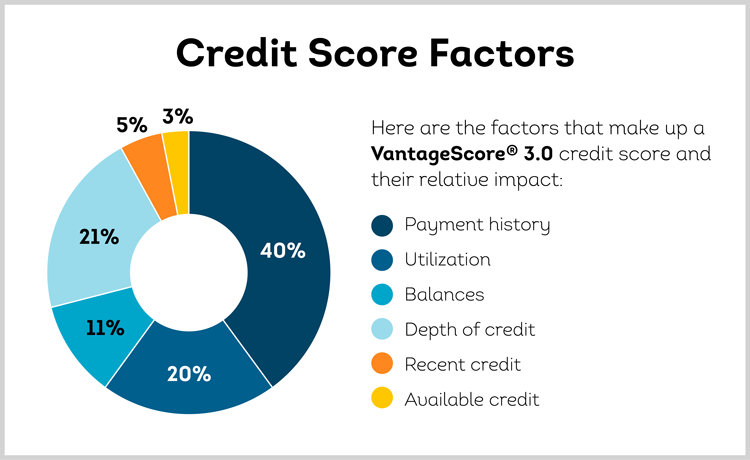
Knowing the credit score factors can give you a good idea about how certain information in your credit report can impact your credit score.
Here are actions that can positively impact your credit score:
- Consistently paying bills on time
- Reducing credit card balances
Actions that may negatively impact your credit score:
- Late payments
- Having high balances (high credit utilization)
- Opening several accounts in a short time frame
Making one more on-time payment may not cause your score to jump significantly after a year of consistent payments. But if you significantly lowered your balances across your credit cards, you may see some positive score movement.
Making payments consistently, keeping balances low, and only applying for credit as needed are good ways to keep your credit on track. Over time, with these good habits, you should see your credit health improve, which can impact your credit score.
How long does it take for a credit score to update after paying off debt?
If you’ve paid off debt and are hoping to see a change in your credit score, the lender first needs to provide the updated balance to the credit reporting agencies. As mentioned before, this usually happens monthly. Once the new balance is updated on your credit reports, you may see a change in your score. However, if you have multiple accounts, you may have information being added or changed frequently, resulting in more frequent score changes.
It’s important for all accounts to be healthy for your credit health to improve. Making positive strides in one account, but missing a payment or increasing your balance in another, could counteract each other.
What is rapid rescoring?
Rapid rescoring is a service your lender may use to get your credit report and subsequently your credit score updated more quickly than normal. Rapid rescoring may be useful if you’re trying to get approval for a credit product, typically a mortgage, and your credit score is close, but not at a lender requirement.
If you’ve recently made positive credit moves but they’re not yet reflected on your reports, lenders can provide account updates to credit reporting agencies and request the information be added before the lender would normally do it. This can result in your report and score being updated within a few days instead of having to wait for the next cycle. It’s important to note that:
- You aren’t able to request a rapid rescore on your own.
- A lender must request one on your behalf and there’s usually a fee for the service, though the cost is covered by the lender.
- A rapid rescore can’t fix previous mistakes or make negative information disappear.
How to better your credit health
The path to healthy credit is paved with consistent good habits. If you’re diligently paying down debt and keeping up with your payments, you should see those positive behaviors reflected in your credit report and credit scores each month.
If you’re looking for more tips to improve your credit health, read our blog on How to Rebuild Credit.