

Key Takeaways:
- Personal loans can be used for many purposes, including debt consolidation, home improvements, emergency expenses, and major purchases, though lender restrictions may apply.
- Most personal loans are installment loans with fixed monthly payments and a set repayment period.
- A personal loan may help simplify finances or provide access to funds for important expenses, but it also creates a new debt obligation.
- The best use of a personal loan often depends on whether the expense is necessary, affordable, and aligned with your financial goals.
- How you manage the loan may impact your credit over time (particularly whether you make on-time payments).

Disclosure:
This post only contains educational information. No financial, tax or legal advice.
This information is for educational purposes only and we do not guarantee the accuracy or completeness of this information. This information does not constitute financial, tax or legal advice and you should consult your own professional adviser regarding your situation. This website may contain links to third party websites. We are not responsible for their content or data collection. Trademarks used in this material are property of their respective owners and no affiliation or endorsement is implied.
Life doesn't always follow a budget. A car breaks down. A medical bill arrives unexpectedly. A major home repair can't wait. Even planned expenses, like a move or home renovation, can feel difficult to manage all at once.
A personal loan is one option that can offer predictable payments and flexibility. But like any form of credit, it’s important to understand how it works, how it may affect your financial picture, and when it may suit your needs.
Before taking out a loan, it's important to understand what a personal loan is used for, when it may make sense, and how it fits into your broader financial picture. Here's what to know before you borrow.
What is a personal loan?
A personal loan is a type of installment loan that allows you to borrow a lump sum of money and repay it over time through regular payments.
It usually isn’t tied to a specific purchase. Unlike auto loans or mortgages, which are designed for a single purpose, personal loans may offer more flexibility in how funds are used. Many personal loans are unsecured, which means they typically don’t require collateral.
If approved, you’ll receive a lump sum upfront and repay it over time according to the terms of your loan agreement.
| Feature | Description |
|---|---|
| Loan type | Often unsecured |
| Funding | Lump sum provided upfront |
| Repayment | Fixed monthly payments typically |
| Length | Typically ranges from months to several years |
| Terms | Varies based on lender criteria, borrower qualifications and other factors |
How do personal loans work?
When you take out a personal loan, you agree to repay the amount borrowed plus interest over a set period.
Your loan terms may depend on several factors, including your credit history, income, existing financial obligations and the lender’s criteria.
Personal loans may come with a fixed interest rate, and if so, your monthly payments will stay the same. For some borrowers, this predictability can make budgeting easier.

Pro Tip:
Prequalifying with multiple lenders may help you compare estimated rates and terms. In many cases, prequalification involves a soft credit inquiry rather than a hard credit inquiry. Because prequalification processes vary by lender, consumers should review the lender’s disclosures to understand whether a soft or hard credit inquiry may be used and any potential impact before proceeding.
What is a personal loan used for?
One of the biggest advantages of a personal loan is flexibility. Depending on lender requirements and your loan agreement, personal loans may be used for a variety of planned or unexpected expenses.
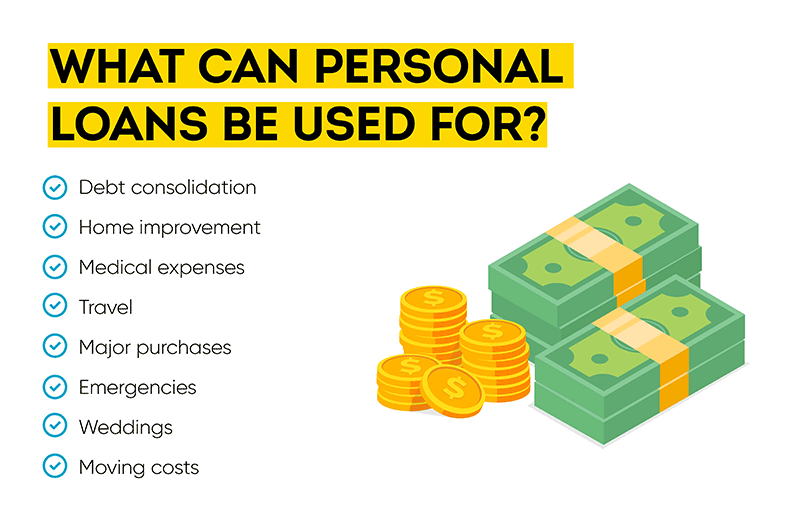
What are some common uses for a personal loan?
Consumers use personal loans for a wide range of reasons. Here are some common examples.
Debt consolidation
A personal loan may be used to combine multiple debts into one monthly payment. Consolidating debt may simplify repayment by reducing the number of accounts and due dates you need to manage. Whether consolidation saves money depends on factors such as interest rates, repayment terms and fees.
Home improvements
Some borrowers use personal loans to pay for repairs or home upgrades, such as fixing a roof, renovating a bathroom, updating a kitchen or replacing appliances. For smaller projects, some homeowners may prefer a personal loan over other financing or options that require home equity.
Medical expenses
Unexpected healthcare costs can be difficult to manage. A personal loan may help cover out-of-pocket expenses and allow repayment over time rather than all at once.
Travel
In some cases, people use personal loans to pay for travel expenses, such as a planned vacation. If you’re considering this option, it’s important to make sure the payments fit within your budget after the trip is over.
Pro Tip:
Financing experiences like travel can add long-term costs. Consider whether paying upfront or saving in advance may be a better fit for your situation.
Major purchases
Personal loans may be used for larger purchases, such as electronics, furniture or appliances, when you prefer fixed monthly payments instead of using a credit card.
Emergencies
Urgent expenses are among the most common reasons borrowers consider a personal loan.
Examples may include:
- Emergency vehicle repairs
- Unexpected home repairs
- Necessary replacement appliances
- Other urgent household expenses
Weddings
Weddings can come with significant costs. Some borrowers use personal loans to cover expenses such as venues, catering or services, then repay the amount over time.
Moving costs
Relocating expenses, whether across town or across the country, can be expensive. A personal loan may help cover moving trucks, deposits or hiring movers.
While personal loans offer flexibility, not every use will make sense for every situation. The best use often depends on your budget, your goals, and your ability to repay the loan comfortably.
What potentially should you avoid using a personal loan for?
Just because a personal loan may be available doesn't mean it's always the best option.
Education expenses
Student loans are specifically designed to help pay for qualified education expenses and may offer borrower benefits and repayment options that personal loans typically do not.
In some cases, lenders may restrict the use of personal loans for post-secondary education expenses. Before applying, review the lender's terms and permitted uses to determine whether a personal loan can be used for your intended purpose.
If you're exploring options to help pay for college or other higher education costs, visit the Federal Student Aid website to learn more about federal student loans, grants and other available resources.
Business expenses
If you need help covering business expenses, consider taking out a business loan instead of a personal loan. Business loans are specifically designed for business-related financing needs and may offer terms better suited for operating expenses, equipment purchases, or growth investments.
Home down payments
You likely can't use a personal loan to pay for a home down payment. Mortgage programs often have requirements regarding the source of down payment funds. Using borrowed money for a down payment could affect mortgage eligibility, depending on lender and loan program requirements. Always consult your mortgage lender before using loan proceeds for this purpose.
Nonessential purchases you can't comfortably afford
If the monthly payments would strain your budget, it may be worth exploring alternatives such as saving for the purchase, delaying the expense, or considering other financing options.
What are the pros and cons of personal loans?
Personal loans can offer flexibility, but they may not be the right choice for every situation. Understanding the potential benefits and considerations may help you decide how a personal loan fits into your financial plans.
Personal loans considerations
| Potential benefits | Potential cons |
|---|---|
| Funds may be used for a variety of purposes, depending on loan terms | Interest charges increase the total amount you’ll repay |
| May offer a lower interest rate than some other forms of borrowing | Taking on a loan increases your overall debt obligations |
| Many personal loans have fixed monthly payments | Monthly payments must be made throughout the loan term |
| Many personal loans do not require collateral | Missed or late payments may negatively affect your credit |
| Making on-time payments may help build credit history | Some loans may include origination fees, prepayment penalties, or other charges |
| Some lenders may provide funds shortly after approval | Approval, rates, terms, and funding speed are not guaranteed |
Potential benefits
Flexible use of funds
Depending on the lender and loan terms, personal loan funds may be used for a variety of purposes, such as consolidating debt or covering unexpected expenses.
Potential lower rates (compared to other higher-interest debt)
Some borrowers may use personal loans to combine higher-interest debts, such as credit card balances, into one loan with a lower interest rate. This may help reduce the total amount of interest paid over time, depending on the loan terms and the borrower's credit profile.
Fixed monthly payments
Many personal loans have fixed interest rates and set repayment terms, which may make monthly payments easier to plan for.
No collateral required
Many personal loans are unsecured, meaning borrowers typically aren't required to secure the loan with an asset such as a vehicle or savings account.
Potential to build credit history
Making on-time payments may have a positive impact on your credit history over time.
Potential for fast access to money
Some lenders may make personal loan funds available shortly after approval. However, approval and funding times vary by lender and individual circumstances.
Potential cons
Interest costs
Personal loans typically include interest charges. As a result, you will generally repay more than the amount originally borrowed.
Increased debt obligations
Taking out a loan adds to your total financial obligations and can put a strain on your finances over time.
Ongoing repayment commitment
Even if a personal loan helps address an immediate financial need, borrowers remain responsible for making scheduled payments for the life of the loan, which could be months to years.
Risk of default
A personal loan adds a monthly payment to your budget. If your financial situation changes, keeping up with payments may become more difficult. Missed payments could result in fees and may negatively affect your credit.
Potential loan-specific fees or penalties
Some lenders may charge fees for certain actions, such as paying off a loan early. Review the loan agreement carefully to understand any fees, penalties, or other terms that may apply.
Approval and loan terms are not guaranteed
Approval, interest rates, loan amounts, repayment terms, and funding speed vary by lender and individual circumstances. Not all applicants will qualify, and available loan offers may differ from what was requested.
How can a personal loan affect your credit?
A personal loan can affect your credit in a few different ways in terms of both when you apply and as you repay it over time.
| Factor | Possible Impact |
|---|---|
| Recent credit | The resulting hard credit inquiry may cause a small, temporary change |
| Payment history | On-time payments may help; missed payments may hurt |
| Total debt | Loan increases overall balances |
| Credit mix | May affect your credit by adding an installment |
In the short term, applying for a loan may temporarily lower your score due to a credit inquiry. Over time, consistent, on-time payments may help build a positive credit history. At the same time, taking on new debt is something to consider carefully, especially if it affects your budget.
If you're using a personal loan to pay off credit cards, it may also change how your revolving balances are reported, which can influence your credit profile.
Note:
As with other forms of credit, missed or late payments may negatively affect your credit history and credit scores.
How do you decide what to use a personal loan for?
Before taking out a loan, it may help to ask:
- Is this expense necessary or time-sensitive?
- Can I comfortably afford the monthly payment?
- Have I compared offers from multiple lenders?
- Do I understand the total repayment cost?
- Have I explored alternatives such as savings or payment plans?
Taking the time to thoughtfully evaluate these questions may help you make a more informed borrowing decision.
Pro Tip:
Review the total cost of the loan, not just the monthly payment. A lower monthly payment may seem attractive, but a longer repayment period could result in paying more interest over the life of the loan.
Monitor your credit as you explore options
A personal loan can be a useful financial tool when used thoughtfully. Understanding what a personal loan is used for and how it fits into your broader financial picture can help you borrow with confidence and clarity.
But, before taking on new credit, it may help to understand where your credit stands today. Your credit history may be one factor lenders consider when determining the loans terms you may receive, including interest rates and repayment options..
With TransUnion free credit monitoring, you can stay informed about changes to your credit report and track key factors that may influence your borrowing options. This can be especially helpful if you’re thinking about applying for a personal loan.
What you get with free credit monitoring from TransUnion:
- See updates to your TransUnion credit report
- Track your credit score daily
- Get alerts about critical changes on your TransUnion credit report
- See score potential recommendations
- And more
Checking your credit regularly may also help you identify areas that you can work on over time.
Disclosure:
Your credit score in our free credit monitoring service is calculated based on the VantageScore® 3.0 model. Lenders and insurers may use different scores to evaluate your eligibility.
Personal Loan FAQs
Personal loans are generally flexible, but lenders may restrict certain uses. Always review your loan agreement.
It may be beneficial for some borrowers, particularly if it simplifies payments or results in more favorable terms. However, whether it's a good choice depends on your overall financial situation and the specific loan terms available to you.
A personal loan may affect your credit profile when you apply and throughout repayment. Factors such as hard inquiries, payment history and overall debt levels can all play a role.
Loan amounts will vary by lender and may depend on factors such as income, credit history, existing debt obligations and lender underwriting criteria.