Learn how to calculate mortgage payments

Summary:
- Understanding how much of a mortgage you can afford can help you make a better home-buying decision.
- A mortgage calculator helps estimate monthly payments, considering factors like loan amount, interest rate, loan term, and other kinds of additional costs.
- To improve the results from a mortgage calculator, use realistic home prices, current interest rates, include all relevant expenses, apply conservative estimates, and run multiple scenarios to better plan your home purchase.
- Before shopping for a mortgage, review credit report and score – lenders will review things like payment history, debt load and other factors

Disclosure:
This post only contains educational information. No financial, tax or legal advice.
This information is for educational purposes only and we do not guarantee the accuracy or completeness of this information. This information does not constitute financial, tax or legal advice and you should consult your own professional adviser regarding your situation. This website may contain links to third party websites. We are not responsible for their content or data collection. Trademarks used in this material are property of their respective owners and no affiliation or endorsement is implied.
Buying a home is a big milestone – and for many, it’s one of the most exciting moments in life. But it’s also a major financial commitment. If you’re not careful, it’s easy to get caught up in the excitement and overlook the true cost of a mortgage.
First-time buyers can make the mistake of focusing only on the home price, without fully understanding how interest rates, loan terms, property taxes, and insurance can affect their monthly payments. This can lead to unexpected costs, financial stress, or even trouble keeping up with payments down the road.
That’s where a mortgage calculator comes in.
A mortgage calculator helps you break down the numbers before you commit. In just a few clicks, you can estimate your monthly payments based on your loan amount, interest rate, and other key factors. This can give you a clearer picture of what you can actually afford—and help to avoid common pitfalls like taking on a loan that stretches your budget too thin.
Using a mortgage calculator early in your home-buying journey can help you make a smarter financial decision. In just a few clicks you can get a better picture of what fits within your budget. Not only does this save you time but also could help you avoid potential financial pitfalls, ensuring you find a home that meets your budget.
What is a mortgage?
Mortgage loan basics
A mortgage is a loan you take out to buy real estate, such as a house or property.
It is a secured loan. This means that the lender provides the loan and holds the property as collateral. The borrower agrees to repay the loans with interest over a set term, typically 15 or 30 years.
Mortgage payment calculators must take into account two parts of the loan:
- Principal: the loan amount and
- Interest: what you pay the lender to borrow money
If the borrower defaults on the mortgage, meaning they don't pay it back based on the predetermined schedule, the lender can initiate foreclosure. In a foreclosure, the property is seized and sold to recover the outstanding loan balance.
Mortgage process overview
Mortgages are obtained through a process that typically involves the following steps:
1. Pre-approval: This helps determine how much you can borrow.

Pro Tip:
Borrowing the full amount listed in a pre-approval doesn’t always make financial sense. Even before this step, you can use a free mortgage calculator like the one above to explore what your monthly mortgage payment would actually be with different amounts borrowed.
2. Mortgage application: Here, you apply for a loan with the lender and provide them with your financial information.
3. Underwriting: This is the lender's process to verify your financial information such as income, assets, debt and other details.
4. Funding: If approved, the lender funds the loan, and the borrower begins making monthly payments.
Using a mortgage calculator alongside these steps is critical to help borrowers better understand their long-term financial responsibility.
Key Factors That Affect a Mortgage Payment
When considering a mortgage, it's essential to understand the various factors that influence your monthly payments. Knowing these expenses helps you learn how to calculate your mortgage payments more accurately.
Here are some factors that might influence the amount due every month:
- Down payment: The down payment is the upfront amount paid when buying a property. Making a larger down payment results in a smaller loan amount. This means lower monthly payments.
- Principal: The principal is the amount borrowed to purchase the home. It is the primary factor used to determine your mortgage payment. Each monthly payment includes a portion of the principal, allowing you to gradually pay off the loan.
- Interest: This is the cost of borrowing money, which you pay to the lender along with the principal. The interest is another key entry in a mortgage calculator. Your credit profile plays a significant role in determining what interest rate you’ll qualify for. Generally, the better your credit history, the lower interest rate you can get.
- Loan term: This is the length of time you have to repay the loan and also affects your mortgage payment.
- A longer loan term typically results in lower monthly payments because the repayment period is extended, but also means you’ll pay more interest over the life of the loan.
- A shorter loan term will have higher monthly payments, but results in less total interest paid over the life of the loan.
- Property taxes: Property taxes are assessed by local governments and are usually based on the value of the property. Lenders often collect property tax payments monthly and hold them in an escrow account to ensure sufficient funds are available to pay the annual tax bill. You can add the estimated property tax into the mortgage calculator for an even more accurate result.
- Homeowners insurance: Lenders typically require homeowners insurance to protect their investment in case of damage or loss to the property. Like property taxes, insurance payments are often collected monthly and held in an escrow account. You can also add this to the mortgage calculator.
- Private mortgage insurance (PMI): If a borrower makes a down payment of less than 20%, they may be required to pay for private mortgage insurance. PMI protects the lender in case the borrower defaults on the loan. Once the loan-to-value ratio improves (usually when the borrower's equity in the home reaches 20%), you can remove PMI.
- Closing costs: These costs can be rolled into the mortgage. They are paid at the closing of a real estate transaction and are in addition to the property cost. These costs cover fees associated with transferring ownership of the property from seller to buyer. According to Rocket Mortgage, closing costs can range from 3% to 6% of the total loan amount.
Typical closing costs may include fees for:
- Appraisal
- Underwriting
- Title services
- Origination charges
- Prepaid taxes and insurance
- Other fees
Use the free mortgage payment calculator above to estimate what you would pay with various loan terms.
Pro Tip:
Be sure to understand whether your mortgage is fixed-rate or adjustable-rate.
- Fixed-rate mortgages have constant interest rates
- Adjustable-rate mortgages can change over time
Also note that this calculator only works for fixed-rate loans and should not be used to evaluate variable-rate mortgages.
Mortgage payment formula
Many people like to use an automatic online mortgage payment calculator to simplify figuring out what their monthly payments will be. However, if you prefer to calculate your estimated mortgage payment by hand, use the formula below for an amortizing loan.
- An amortized loan is a loan where the borrower pays both the principal and the interest over the life of the loan, such as with most mortgages. Non-amortized loans might require the borrower to pay differently, such as the principal in one lump sum.
| Symbol | Definition |
|---|---|
| M | Monthly payment |
| P | Total loan principal |
| r | Loan monthly interest rate |
| n | Number of monthly payments |
Let’s use this example:
You bought a house for $500,000 and decided to make a 20% down payment of $100,000. The principal loan amount is $400,000.
You take out a 30-year mortgage loan with a fixed annual interest rate of 7%.
What’s your monthly payment?
Variables:
P = $400,000
r = 7% yearly rate. Divide by 12 to get the monthly rate. 7.0% / 12 = 0.5833% or .005833
n = 30 years. Multiply to get the # of monthly payments = 30*12 = 360
Now, let's plug these values into the equation:
M = 400,000 x [0.005833*(1+0.005833)^360] / [(1+0.005833)^360-1)
M= $2,661
Determining monthly mortgage payments manually is a valid method. However, it can be prone to human error. If you prefer not to undertake complicated math by hand (or want to double check your work), you can add simplicity with a free mortgage payment calculator like the one at the top of the page.
Benefits of a mortgage calculator
At its core, a mortgage calculator can be a tool to help determine if a proposed home loan fits your financial needs. Specifically, the benefits of mortgage payment calculators include:
- Quick and easy to use:You can estimate mortgage payments quickly. No need for complicated math – just enter in a few numbers and get instant results for different loan scenarios.
- Helps you plan your budget: These calculators can give you a clear breakdown of your estimated home costs. You can see how your monthly payments change based on different interest rates or loan lengths (like 15 vs. 30 years). This helps you build a realistic budget and understand what kind of mortgage you can afford. Knowing these details could help you build a realistic budget that accounts for the type of mortgage you can afford.
- Assists with loan comparisons: You can compare different loan options by adjusting things like down payment, interest rate, and loan term. Whether you're buying a home or refinancing, this tool helps you make smarter decisions.
- Free and empowering: With the free mortgage calculator above, you can try out as many scenarios as you want. By exploring your options, you’ll feel more confident making mortgage choices that match your financial goals.

How to use our mortgage calculator
Mortgage calculators are simple to use and can help you estimate your monthly loan payments and overall loan affordability.
Steps to calculate your payment
Here’s how to get your estimate with the mortgage calculator at the top of the page:
- Home price: Enter total amount you plan to borrow for your mortgage in the “Home Price” box.
- Down payment: Enter the figures of your down payment in the “Down Payment” boxes either as a dollar amount or percentage.
- Interest rate: Input the annual interest rate for the loan in the “Interest Rate” box. If you are unsure of the exact rate, you can use an estimated rate.
- Loan term: Input the length of the loan in years or months.
- Calculate: After you’ve entered in your data, then hit the calculate button.
The mortgage calculator will display your estimated monthly payment and break it down into interest and principal.
Advanced options
If you want to refine the estimate further, then you have the option to add more information. Enter these figures into each respective box.
- Property tax: Enter in monthly property taxes.
- Homeowner’s Insurance: Enter in monthly home insurance.
Additionally, you can open up the dropdown menu called “Advanced” under the payment breakdown to add data about:
- Homeowners association (HOA) fees: If applicable, input HOA monthly dues.
- PMI: If applicable, input mortgage insurance monthly amount.
As you enter or adjust any of the values above, the estimated monthly payment will automatically update to reflect your changes.
Pro Tip:
This mortgage calculator also provides other kinds of payment breakdowns, including estimated payments over time and balance over time graphs, and an amortization schedule by month and year.
Calculator output
The mortgage calculator will display your estimated monthly payment in the pie chart to the right. In the tabs above the pie chart, you can explore more loan details. For instance, you can review balances over time or examine the split of estimated principal and interest paid each month in the amortization breakdown. You can also find total interest paid, projected payoff date, and total loan cost.
Making adjustments
You’re able to change any of these inputs on the fly to see how they impact your estimated monthly payments and total loan costs. This is particularly useful for comparing different loan options, such as choosing between a shorter and longer loan term.
Tips to make the most of using a mortgage calculator
A mortgage calculator can be a powerful tool to help you plan your home purchase—but only if you use it the right way. Many buyers run quick estimates without thinking through the details, which can lead to unrealistic expectations or missed costs. Remember: the calculator is only as accurate as the information you put into it.
Below are some tips to improve the precision of the mortgage calculator’s results:
- Look at actual home prices: If you don’t have a specific home in mind yet, look at recent sales in the neighborhood you’re interested in. Use actual listing prices from similar homes to get a realistic idea of what you might spend.
- Use current interest rates: Mortgage rates can change often. Be sure to use the most up-to-date rates from trusted sources like banks or government websites. Also, keep in mind that your credit score affects the rate you’ll qualify for—better credit usually means lower rates.
- Include relevant expenses: Property taxes and homeowner’s insurance can significantly impact the results of a mortgage calculator. Include these costs plus any other pertinent expenses such as PMI or HOA in your calculations to generate a more realistic estimate.
- Use conservative estimates: Consider adding a little buffer to the amounts you put in the mortgage calculator. If you’re unsure about future costs—like rising interest rates or taxes—use slightly higher estimates. This helps you prepare for changes and avoid stretching your budget too thin.
- Run a few scenarios: Try comparing different loan terms, interest rates, or principal amounts. Take note of how it changes the estimated monthly payment amount. These scenarios can help prospective home-buyers to calculate a range of estimated payments, understand loan affordability, and plan their finances.
- Consult with a pro: While a mortgage calculator is a great starting point, it’s not a substitute for expert advice. A financial advisor or mortgage lender can help you understand your options and guide you toward the best loan for your situation.


Research and compare lenders
Since rates and terms vary across lenders, ensure you research different lenders as you look for a mortgage. While you’re rate shopping, compare things like:
- Interest rates
- Loan terms
- Fees
You can get quotes from several different lenders. Additionally, don’t limit yourself to one type of lender; also consider banks and credit unions as options.
Pro Tip:
Getting detailed, real-world rates from lenders can also help you get more accurate results from a mortgage calculator.
As you research, also consider getting pre-approved by a lender. This involves providing financial documents to a lender that will assess your credit risk and provide a pre-approval letter. Sellers often prefer buyers with pre-approval, and it gives you a clear understanding of your budget.
However, be mindful of applying to too many lenders, as this can result in multiple hard inquiries on your credit report. Many hard inquiries potentially decreases your credit score. By limiting your loan applications to a short window, you can reduce the negative impact to your credit score.
Understand the different types of home loans
If you’re new to home-buying, you might be surprised to learn there are different types of home loans. Knowing some different types of mortgages available to you can help you make a more informed decision––not to mention you can get more accurate results when using the mortgage payment calculator.
Common types of home loans include:
By loan source:
- Conventional loans: These are the most common types of mortgages, but they often require a higher credit score than other types of loans.
- Government-backed loans: These mortgage loans are available through government departments and agencies, like Federal Housing Administration (FHA) loans, Department of Veterans Affairs (VA) loans and United States Department of Agriculture (USDA) loans. They typically allow borrowers to save on interest and down payments, but you must meet certain criteria to get these loans.
By interest rate:
- Fixed-rate loans: These loans have a fixed interest rate throughout the term. This means that you’ll pay the same interest rate regardless of whether the market’s interest rate rises or falls. These can be a good fit for those who plan to own their home for a long time and want predictable terms.
- Adjustable-rate loans:The interest rates adjust based on the market with this type of mortgage and are typically a good fit for those who want to sell within a shorter time frame. Note: Be aware that costs can increase or decrease depending on the market index after the teaser rate expires.
By loan purpose:
- Purchase loans: These are used to finance the purchase of a new home.
- Refinance loans: These loans are used to replace an existing mortgage with a new one, often with the goal of getting a lower interest rate or reducing monthly payments.
- Home equity loans: These loans enable you to borrow against the equity in the home to access funds for various purposes.
Once you have more information about the type of loan you might get, you can use the free mortgage calculator to understand what your monthly payments might be.
Strengthen finances
Getting your finances in better shape can help you secure more favorable loan terms and lead to lower interest rates and less money spent in the long term.
Some financial aspects to focus on to secure a good mortgage can include:
Good credit: Having good credit not only can increase your chances of qualifying for a loan but also may secure more favorable loan terms, like lower interest rates. To work on your credit health, consider:
- Demonstrating responsible credit card usage
- Maintaining a positive payment history
- Lowering your credit utilization ratio
- Working to pay off existing debt
Finally, be sure to examine your credit report and promptly dispute inaccuracies that may harm your credit profile. You can get a free credit report each week through annualcreditreport.com.
Debt-to-income (DTI): This ratio compares your total monthly debt payments to your gross income. Lenders look at your income compared to debt levels as a metric to determine borrowing risk and will favor borrowers that have low debt-to-income ratios.
- A low DTI signals that you can manage your debt burden with the amount of income earned.
- A high DTI can indicate that you are saddled with too much debt relative to how much income you have and could be overstretched.
Aim for a DTI preferably at or below 36%. DTI improvement can help your odds of mortgage loan approval or can provide better loan options.
Down payment: A larger down payment will reduce the total loan amount and your loan-to-value ratio (LTV). Lenders may use LTV to determine if they will lend to you.
A lower LTV can lead to better interest rates and help you potentially avoid private mortgage insurance (PMI). PMI is typically required if you have a conventional loan and are unable to put down at least 20% of the home’s purchase price (i.e. a 20% down payment).
Even a small increase in a down payment can have a large impact over decades of home ownership. The mortgage calculator can help you see the difference that even a few extra thousand dollars in a down payment can make.
How to lower mortgage payments
If you’re a current homeowner––or just running potential numbers on a mortgage calculator––and aren’t satisfied with what you see, you may want to find ways to lower your monthly payment.
Here are some factors that you can consider if you’re looking for some financial relief when calculating monthly mortgage payments:
Extend the loan term
For a new loan or refinance, if you increase the mortgage term duration, then you can reduce your monthly payments. However, extending the loan term could also raise the interest rate for your loan.
And with that, you can lower your monthly expenses to cover the mortgage payment, but a higher interest rate could mean spending more money on overall interest over the term of the loan.
You might consider taking out the mortgage loan duration if you’re having trouble making full monthly payments. If you are experiencing financial distress, you can contact your lender to discuss your options to include forbearance or deferment.
Note:
A term change can also occur during the refinancing process if you find a new loan with a longer term. Use a mortgage calculator to see how a different loan term may impact your monthly payment.
Refinance to a lower interest rate
Another way to lower your payment is to refinance your loan. Mortgage refinancing is the process of switching your current mortgage to a new one. Doing so can help you obtain mortgage terms that better fit your financial needs, such as a lower interest rate.
Assess the current market conditions to help you decide if now is a good time to refinance your home. For example, if current interest rates are lower than when you initially took out your mortgage, consider refinancing to secure a lower interest rate. Then, use a mortgage payment calculator to see what the actual payment difference might be.
Consider all expenses: Generally, a good time to refinance into a new loan is when interest rates are at least 1% lower than your current loan. It may not make sense to “rate chase” to swap into a loan with a marginally lower interest rate. Because of the time, effort and expense (such as origination fees, appraisal fees, title insurance, etc.) that is involved in refinancing, the rate savings may not outweigh the costs.
Increase your down payment
For a new loan, if you put down a larger down payment upfront, then you can lower the principal amount, which can lead to a lower monthly payment.
Here are some tips to help you save for a larger down payment:
- Build a budget: Develop a detailed budget that outlines your income and expenses. Identify areas where you can cut back or save more andconsider allocating a specific amount each month towards your down payment fund.
- Automate savings: Set up automatic transfers to a dedicated savings account. This ensures that a portion of your income is consistently directed toward your down payment goal before you have a chance to spend it.
- Eliminate high-interest debt: Prioritize paying off high-interest debt, such as credit cards or personal loans. You can redirect the money you save on interest toward your down payment fund.
- Decrease nonessential spending: Review your monthly expenses and identify any items that can be reduced or eliminated. Use the money saved toward your down payment fund.
Even adding a few thousand extra dollars in your down payment can make a huge difference over a twenty or thirty-year loan. Use the free mortgage calculator to experiment with different down payment amounts and see how they could impact the overall cost of your home.
Remove your PMI
There are a couple of ways that you can remove Private Mortgage Insurance (PMI) in order to lower your monthly mortgage payment.
For a new loan, if you put down less than 20% with a conventional loan, then you will need to pay PMI. This is an additional expense on top of your mortgage payment. If possible, aim to make a bigger down payment to avoid this added cost. If you can’t put down more, then you can contact your lender to request to cancel PMI when your loan balance reaches 80% of the original home value.
Another way to remove PMI is to refinance your loan. If your home appreciates in value or you've paid down enough of your mortgage, then refinancing can help you reach the 20% equity threshold needed to eliminate PMI.
Considerations before you loan shop
Aside from using a mortgage calculator to estimate monthly payments, consider taking some additional steps before you start shopping for a mortgage.
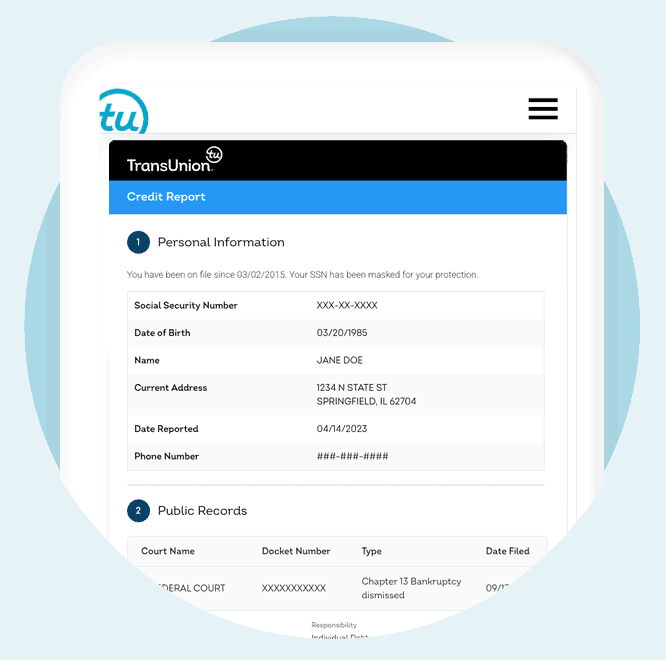
First, review your credit report and credit score to gain insights into your credit health. When determining your eligibility for a mortgage, lenders often review factors like:
- Your credit score
- Payment history
- Debt load
- Other financial factors
As such, it could be a good idea to monitor your credit more regularly to spot inaccuracies quickly, avoid surprises or strategize steps to work on your credit health.
Understanding your credit health, taking steps to improve it, and estimating costs with a mortgage calculator are all great ways to help achieve better rates and reduce your long-term financial burden.
Note:
Be sure to dispute any inaccuracies that could negatively impact your credit health.
Mortgage Calculator FAQs
You should use a mortgage payment calculator whenever you're:
- Considering a new mortgage
- Refinancing an existing loan, or
- If your financial situation changes
Using a mortgage payment calculator regularly can help you stay informed about your potential payments and make better financial decisions by allowing you to quickly assess how changes in interest rates, loan terms, or other factors will affect your monthly obligations.
Your credit score significantly affects interest rates offered by lenders. Higher credit scores may result in lower mortgage rates, which can lower your monthly payment. A mortgage calculator can help you see how different interest rates impact your monthly costs.
If you notice any inconsistencies or inaccuracies on your credit report, take care of them as quickly as possible, especially before applying for a mortgage. Visit the Dispute Support Center to learn more.
The mortgage calculator above provides a simple way to estimate your monthly mortgage payments. If you want to see how those payments are applied to your loan balance, you can use the amortization calculator.
The amortization schedule can give you a detailed understanding of how your loan balance decreases over time and how much interest you will pay in total.