


Key Takeaways:
- A credit card can help you establish a credit history when the account is reported to credit reporting agencies and you manage it responsibly.
- Paying your bills on time is an important credit habit because payment history is a factor used in calculating credit scores.
- Generally, try to keep your credit utilization at 30% or less. Lower utilization is generally better for your credit health.
- You don’t need to leave part of your statement balance unpaid from month to month simply for the purpose of building credit. Whenever possible, consider paying your statement balance in full by the due date.
- Be thoughtful about applying for new credit. A credit card application can result in a hard inquiry, which may temporarily lower your credit score.
- Building credit takes time. Monitoring your credit report and score can help you understand your credit history and spot information that may need your attention.

Disclosure:
This post only contains educational information. No financial, tax or legal advice.
This information is for educational purposes only and we do not guarantee the accuracy or completeness of this information. This information does not constitute financial, tax or legal advice and you should consult your own professional adviser regarding your situation. This website may contain links to third party websites. We are not responsible for their content or data collection. Trademarks used in this material are property of their respective owners and no affiliation or endorsement is implied.
Building credit can feel confusing at first.
You're approved for a credit card, told to use it responsibly and expected to somehow know what that means. Should you use the card every day? Carry an unpaid balance? Pay it off immediately? How much should you spend?
The answers aren't always obvious.
A credit card can be a useful tool for building a credit history because it creates a record of how you manage credit over time. When used thoughtfully, it can help you establish positive financial habits and demonstrate responsible use of credit. Used carelessly, it can work against the very goals you're trying to achieve.
Whether you're opening your first account, rebuilding after a financial setback or trying to strengthen an existing credit profile, understanding how credit cards affect your credit can help you make more informed financial decisions.
In this guide, we'll explain how credit cards help build credit, the habits that matter most, common mistakes to avoid and how to monitor your progress along the way. If you're looking for a broader overview, see our guide on how to build credit.
How Credit Cards Can Help Build Credit
Having a credit card can help you build credit, but how you manage the account can also affect your credit.
Credit card companies may provide information about your account to credit reporting agencies such as TransUnion. Depending on what's reported, your credit report may include information about the account, such as your balance, credit limit, payment status and account history.
Over time, that information helps form your credit history. Credit scoring models can use information in a credit report to calculate a credit score, although models weigh information differently.
That's why the way you manage your credit card today can matter to your credit profile over time. A pattern of paying on time and keeping balances manageable can show a history of responsible credit use, while missed payments and high balances may signal greater credit risk.
What factors can affect your credit score?
Your credit score is calculated using information in your credit report, and understanding the factors that can affect your credit score can help you see why the way you use a credit card matters.
While scoring models may consider information differently, common factors include:
- Payment history: Your record of making payments on time.
- Amounts owed: How much debt you owe, including how much of your available revolving credit you’re using.
- Credit history length: How long your credit accounts have been open.
- Credit mix: The different types of credit accounts in your credit history.
- New credit: Recently opened accounts and applications for credit.
These factors help explain why everyday credit card habits matter. Paying on time, managing how much of your available credit you use and being thoughtful about applying for new credit can all affect information used to calculate your credit score.
How credit card activity may show up in your credit history
| What’s happening | Why it matters |
|---|---|
| You use your credit card | Purchases add to your account balance. The balance reported by your card issuer can affect your credit utilization, which is a factor used in calculating credit scores. |
| You manage your account | Your payments and balance create a record of how you manage the account. If reported, information such as your payment history and balance can become part of your credit history and may be considered in calculating credit scores. |
| Your card issuer reports account information | Credit card companies may report information about your account to credit reporting agencies such as TransUnion. What is reported can become part of your credit report and credit history. |
| Your credit report reflects reported information | Your credit report can show details about the account, such as its payment history and reported balance. This information helps make up the credit history that scoring models may evaluate. |
| Credit scoring models use credit report information | Scoring models evaluate information in your credit report to calculate a credit score. Different scoring models may weigh that information differently, so you can have more than one credit score. |
No single purchase or payment permanently defines your credit profile. What matters is the pattern your credit history shows over time.
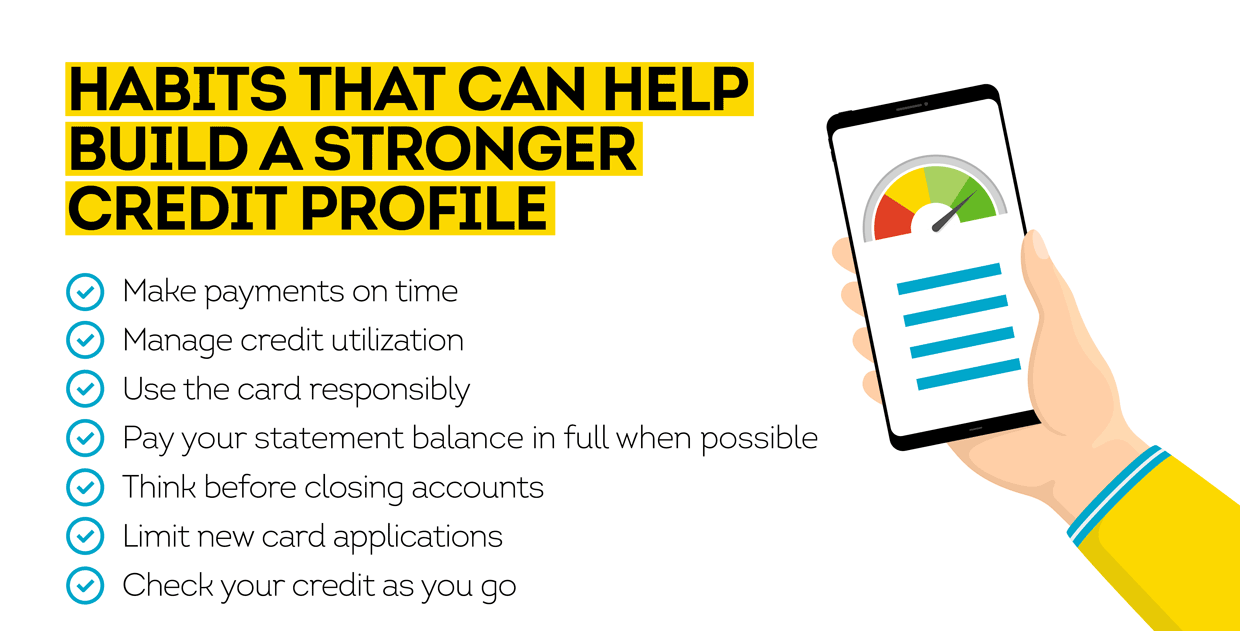
Habits that can help build a stronger credit profile
1. Make payments on time
When you're using a credit card to build credit, paying on time should be near the top of your list.
A history of on-time payments helps demonstrate responsible credit management. On the other hand, missed payments can remain on a credit report for years and may negatively affect a consumer's credit profile.

Pro Tip:
Consider setting up automatic payments for at least the minimum amount due. Doing so may help reduce the risk of accidentally missing a payment.
2. Manage credit utilization
Your credit utilization rate compares how much available credit you're using with your total available credit.
For example:
| Credit limit | Current balance | Utilization |
|---|---|---|
| $1,000 | $100 | 10% |
| $1,000 | $300 | 30% |
| $1,000 | $800 | 80% |
All three examples use the same $1,000 credit limit. What changes is the percentage of available credit being used. As a general guideline, try to keep your credit utilization at 30% or less, and lower is generally better for your credit health.
As general guidance, try to keep your credit utilization at 30% or less, and lower is generally better for your credit health. That means a $300 balance or less on a card with a $1,000 credit limit. Keep in mind that 30% isn’t a magic number or a guarantee to get a good credit score.
Try to avoid maxing out your cards or charging purchases that will be difficult to repay. Keeping balances manageable is good for utilization and, just as importantly, can make your debt easier to manage.
Pro Tip:
You don't need to wait until your payment due date to reduce a credit card balance. If your balance is getting higher than you're comfortable with, making an additional payment during the month can help you keep it manageable
3. Use the card responsibly
Building credit doesn't require making large purchases. Small, recurring purchases can create a history of account activity.
In fact, many consumers build positive payment histories using a credit card for routine expenses such as:
- Gas
- Groceries
- Streaming services
- Cell phone bills
The amount you spend is often less important than demonstrating consistent, responsible use.
A simple approach is to choose one or two recurring expenses and pay the balance on time each month.
4. Pay your statement balance in full when possible
Whenever possible, consider paying your statement balance in full by the due date. Doing so can help you avoid interest on purchases when your card has a grace period and you aren’t carrying an unpaid balance from month to month.
If you can’t pay the full statement balance, make at least the minimum payment by the due date. Paying more than the minimum can reduce your balance faster and may lower the amount of interest you pay.
Keeping your balance manageable can also help keep your credit utilization lower and make your debt easier to manage.
5. Think before closing accounts
Length of credit history is a factor considered by many credit scoring models. Closing a credit card can also reduce your available credit, which could affect your credit utilization.
Pro Tip:
Don't close an old credit card solely because you no longer use it. Consider the account's fees, available credit and place in your overall financial picture. Learn more about what to consider before canceling a credit card.
6. Limit new card applications
When you apply for a credit card, the lender will typically review your credit as part of the application, which can result in a hard inquiry on your credit report. A hard inquiry may temporarily lower your credit score, although the impact can vary. Consider applying for a new card only when it fits your financial needs rather than simply to increase your available credit.
7. Check your credit as you go
Building credit shouldn't feel like flying blind. Reviewing your credit information can help you see what's being reported and spot information you don't recognize. Your credit score can also change over time as information in your credit report changes. Rather than focusing on every score movement, pay attention to the underlying factors and the habits you can control.
Pro Tip:
Use free credit monitoring from TransUnion to keep tabs on your TransUnion credit report and score and better understand factors that may be affecting your credit.
What Is the Best Credit Card for Building Credit?
There's no single credit card that's right for everyone. The best option depends on your financial situation, goals and credit history.
| Where you're starting | Option to explore | What to know |
|---|---|---|
| New to credit or have limited credit history | Secured credit card | A secured card may be an option if you have little or no credit history or have had difficulty qualifying for an unsecured card. It typically requires a refundable security deposit. |
| College student | Student card | Some cards are designed for eligible college students who are beginning to establish credit. Eligibility, fees and features vary by issuer. |
| Unable to qualify for your own card | Authorized-user arrangement | Becoming an authorized user may help you establish credit if the account is reported to credit reporting agencies, but the effect can vary based on the account’s history and the credit scoring model used. |
| Established credit | Unsecured credit card | Compare fees, interest rates and features before applying. |
Whatever type of card you're considering, compare costs and terms before applying. Look at the annual percentage rate (APR), annual fee, security-deposit requirements and other features that matter to you. Again, it’s a good idea to only apply for a new credit card when it fits your financial needs.
Credit-Building Myths Worth Leaving Behind
One reason people struggle with credit building is that bad information spreads quickly.
| Myth | What to know instead |
|---|---|
| I need to carry an unpaid balance from month to month to build credit. | You don’t need to leave part of your statement balance unpaid from one month to the next simply for the purpose of building credit. Paying your statement balance in full can also help you avoid interest charges on purchases when your card’s terms provide a grace period and you maintain it. |
| I need several credit cards to build credit history. | You don't need a wallet full of cards to start establishing a credit history. |
| Large purchases build credit faster. | Spending more isn't the goal. Responsible account management over time is what matters. |
| I need to use exactly 30% of my limit. | You don’t need to use exactly 30% of your credit limit. As a general guideline, try to keep your credit utilization at 30% or less, and lower is generally better for your credit health. The 30% guideline isn’t a target you need to reach or a guarantee of a particular credit score. |
| Checking my own credit score hurts it. | Checking your own credit is considered a soft inquiry and doesn't affect your credit score the way a hard inquiry associated with an application may. |
Credit Building Looks Different for Everyone
The right strategy could depend on where you are on your financial journey.
If You're New to Credit
Everybody starts somewhere. If you have little or no credit history, don't worry about doing everything at once. One card that you can comfortably manage may be enough to get started. A secured or student card may also be worth exploring, depending on your situation.
If You've Had Credit Challenges
You can't change what's already happened, but you can control how you manage credit going forward. Start with the basics: pay on time, keep balances manageable and avoid taking on credit you don't need.
If You Already Have an Established Credit History
Building credit isn't only for beginners. Continue paying on time, watch your balances and review your credit information periodically. Before opening or closing an account, consider how that decision fits into your broader financial situation.
How Long Does It Take to Build Credit With a Credit Card?
There's no set timetable for building credit with a credit card. Someone opening a first credit account is starting from a very different place than someone who already has years of credit history.
If you are starting from scratch, it may take several months for a credit score to be established after you open a credit account. The timing can vary depending on the credit scoring model and other factors.
From there, your credit profile can continue to change as information in your credit history changes. Payment history, balances, account age and new credit activity can all play a role, and different credit scoring models may weigh that information differently.
Think of building credit less like hitting a target date and more like developing a track record.
Focus on what you can control: pay on time, keep balances manageable, apply for credit thoughtfully and give it time for your credit history to develop.
Monitor Your Credit as You Build It
Building credit takes time, so it can be helpful to keep track of your credit along the way.
That's one reason checking your credit can be useful. Your credit report shows information reported about your credit accounts, while your credit score provides a snapshot based on information used by a particular scoring model.
With free credit monitoring from TransUnion, you can access your TransUnion credit report, view your credit score, see factors that may be affecting your score, and more.
It's also smart to periodically review your credit reports for information you don't recognize or believe is inaccurate. Then keep an eye on the bigger picture. Reviewing your credit information can help you understand what's changing and spot something that doesn't look right.
Pro Tip:
Pay attention to the information behind your credit score, not just the number itself. Your payment history, balances and other credit information can provide useful context as your credit history develops.
FAQs
Yes. You don't need multiple cards just for the purpose of establishing credit history. What matters is how you manage the account over time.
Whenever possible, consider paying your statement balance in full by the due date. You don’t need to leave part of your statement balance unpaid from month to month simply for the purpose of building credit. Paying in full can also help you avoid interest charges on purchases when your card’s terms provide a grace period and you maintain it.
As a general guideline, try to keep your credit utilization at 30% or less, and keep in mind that lower is generally better for your credit health. For example, if you have a $1,000 credit limit, aim to keep your balance at $300 or less. Keeping your balance manageable can also make it easier to pay your statement balance in full and avoid interest.
A secured credit card may help consumers establish a credit history when account activity is reported and the account is managed responsibly.
Don’t worry, checking your own credit report is considered a soft inquiry – and those don’t affect your score.
Many consumers find it helpful to review their credit information regularly to track changes, identify potential inaccuracies and watch for signs of fraud.